
Help Research and Support the Response to Hurricane Irma
We need your help! If you have a few minutes, please read below.
As Hurricane Irma bears down on Florida, hundreds, maybe thousands of organizations are preparing to descend upon the state to support the survivors. It is an effort that takes many different types of people from many different organizations. But who are these groups? How do they find each other?
These questions are the impetus for the Response Roster Project. We want to understand response efforts from the perspective of both the official and unofficial response. Who are the unsung heroes and responders taking time to help in any way they can?
We need your help! If you have a few minutes, please read below.
As Hurricane Irma bears down on Florida, hundreds, maybe thousands of organizations are preparing to descend upon the state to support the survivors. It is an effort that takes many different types of people from many different organizations. But who are these groups? How do they find each other?
These questions are the impetus for the Response Roster Project, an effort I am supporting with G&H International Services, Inc. We want to understand response efforts from the perspective of both the official and unofficial response. Who are the unsung heroes and responders taking time to help in any way they can?
This project provides some critical understanding about how these various groups, projects and initiatives can be better supported and integrated in the future. It is impossible to support the survivors of disasters such as Hurricanes Harvey and Irma without the support of neighbors, non-profits (e.g., Humanity Road), and other groups that form as needs arise (e.g., Cajun Navy).
The Project
Today, we officially launch the Response Roster Project. It as an operational research tool designed to understand who is responding and how they are finding each other. This project is unique in that it has a real-time operational component that allows the public as well as responders to:
- Submit any type of organization that is helping survivors of Hurricanes Harvey and Irma in any way; and
- Search and find each other during response and recovery efforts.
This catalogue will be actively curated throughout the response and recovery to Hurricanes Harvey and Irma. When the dust settles, this information will be used to understand how self-organized groups can be better supported in future disasters.
How You Can Help
Helping will take just a few minutes of your time. Specifically, we need help finding the various groups, projects and initiatives that are supporting response and recovery efforts. You can submit your findings using a simple form found at:
No time to submit? Please help spread the word! If you have any questions about the project, please contact us

Looking for My Virtual EM Conference Presentation?
A couple weeks ago I informed you that I was participating in my first virtual conference. I am happy to report the conference was a resounding success and I had many people attend my session on data, technology and social media for disaster management.
Unfortunately, I know many of you could not make it. Don't fret! Check out the recorded video below...
A couple weeks ago I informed you that I was participating in my first virtual conference. I am happy to report the conference was a resounding success and I had many people attend my session on data, technology and social media for disaster management.
Unfortunately, I know many of you could not make it. Don't fret! Check out the recorded video below.
If you are still interested in accessing all videos from the conference, you can purchase the VIP All Access Pass until October 10 via this link. Be sure to use the code DISASTERNET10 for 10% off!
Feedback Needed on House Bill Proposing Social Media Research Project with Red Cross
Representative Thompson from Mississippi introduced a bill to the House of Representatives for the American Red Cross (ARC) to conduct a pilot research project to better leverage social media in disasters. The language in the bill is fairly vague, but I gather they want the ARC to implement something tangible and then evaluate its usefulness and performance.
A study like this could be very useful to the wider social media in emergency management (SMEM) community. I particularly like how the bill incorporates the use of social media to help deliver response supplies to affected areas, a form of operational intelligence. And social media for operations and intelligence is the next frontier of social media research that will enable disaster decision makers to make better decisions faster and more accurately.
I will be providing feedback on this bill and am curious about others' thoughts. What other components of SMEM should be researched? Will this be useful to you? How so?
You can track the bill here. Here are the quick and dirty details of the bill:
Representative Thompson from Mississippi introduced a bill to the House of Representatives for the American Red Cross (ARC) to conduct a pilot research project to better leverage social media in disasters. The language in the bill is fairly vague, but I gather they want the ARC to implement something tangible and then evaluate its usefulness and performance.
A study like this could be very useful to the wider social media in emergency management (SMEM) community. I particularly like how the bill incorporates the use of social media to help deliver response supplies to affected areas, a form of operational intelligence. And social media for operations and intelligence is the next frontier of social media research that will enable disaster decision makers to make better decisions faster and more accurately.
I will be providing feedback on this bill and am curious about others' thoughts. What other components of SMEM should be researched? Will this be useful to you? How so?
You can track the bill here. Here are the quick and dirty details of the bill:
Department of Homeland Security pilot program
(a) In general. --
The Secretary of Homeland Security, acting through the Under Secretary for Science and Technology of the Department of Homeland Security, shall conduct a one-year pilot program with the American National Red Cross to research and develop mechanisms for the Department to better leverage social media to improve preparedness and response capabilities, including the following:
(1) The timely dissemination of public preparedness information for terrorist attacks and other disasters.
(2) The delivery of response supplies to affected areas.
(b) Report.--
Not later than 90 days after completion of the pilot program required under subsection (a), the Secretary of Homeland Security shall submit to the Committee on Homeland Security of the House of Representatives and the Committee on Homeland Security and Governmental Affairs of the Senate a report on the lessons learned from such pilot program and any plan to integrate such lessons into operations of the Department of Homeland Security.
Are Disaster Infographics Still Cool? Useful?
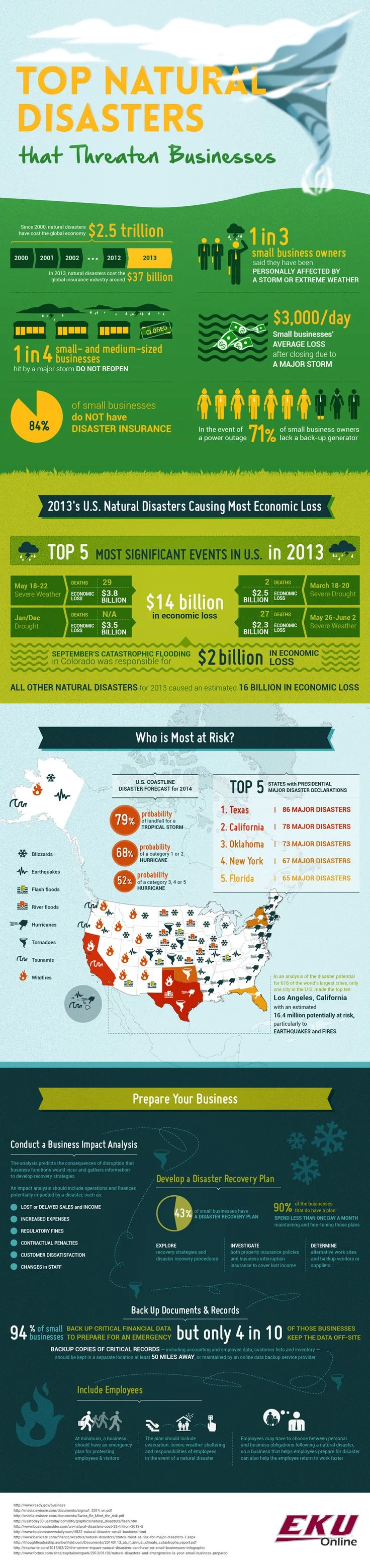
It seems like every week or month, I get "the latest" disaster infographic in my inbox. Inforgraphics have become popular in recent years to communicate complicated topics and data. There are infographics on social media, types of hazards, impact to businesses, emergency management careers, etc. I keep a Pinterest board for these types of graphics (see below).
Because I am largely a curator of this information, not a consumer, I am not clear how infographics have helped the industry. Are disaster infographics useful? How have they helped? Are they effective? Have you used any in your work? If so, how?
Check out of a few of the infographics below and let me know what you think.
It seems like every week or month, I get "the latest" disaster infographic in my inbox. Inforgraphics have become popular in recent years to communicate complicated topics and data. There are infographics on social media, types of hazards, impact to businesses, emergency management careers, etc. I keep a Pinterest board for these types of graphics.
Many that I have seen, though, are actually marketing and recruiting tools for bachelors and masters emergency management programs. I am not opposed to this approach, but I am left wondering about the value of infographics these days.
Because I am largely a curator of this information, not a consumer, I am not clear how infographics have helped the industry. Are disaster infographics useful? How have they helped? Are they effective? Have you used any in your work? If so, how?
Check out of a few of the ones below.


Exercising Social Media - Review of and Q&A with EMSocialSimulation
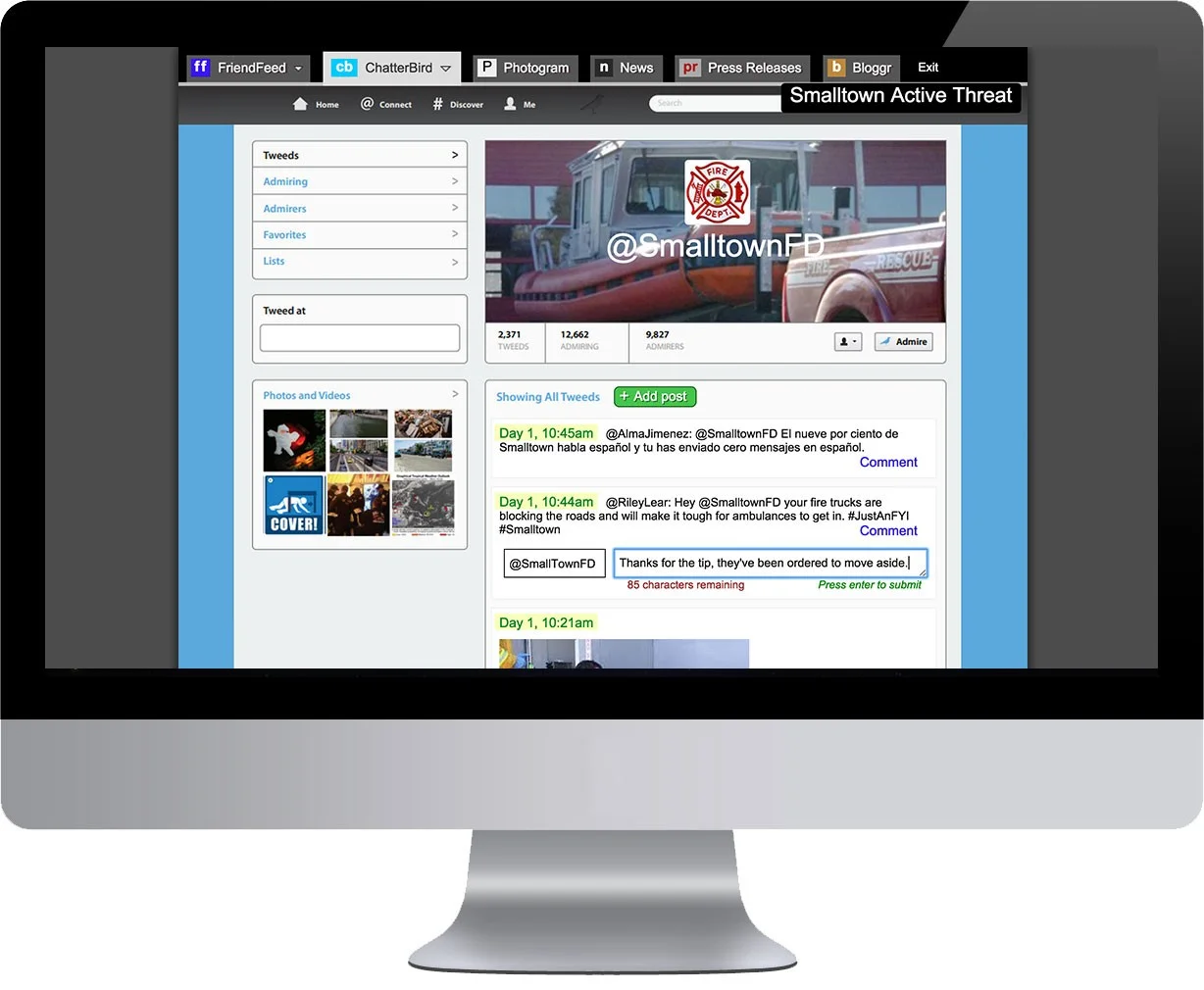
I was recently able to talk with both Corey Mulryan and Kyle McPhee from Hagerty Consulting, a well-known and fast growing emergency management consulting firm. Corey and Kyle have been leading an effort at Hagerty to develop a new social media exercise tool called EMSocialSimulation. This blog post contains a review of the tool as well as Hagerty's Q&A responses that provide additional information.
EMSocialSimulation is a great social media simulation tool geared toward organizations and jurisdictions looking to train and exercise on beginner to intermediate social media capabilities at an affordable price. I was impressed...
I was recently able to talk with both Corey Mulryan and Kyle McPhee from Hagerty Consulting, a well-known and fast growing emergency management consulting firm. Corey and Kyle have been leading an effort at Hagerty to develop a new social media exercise tool called EMSocialSimulation. This blog post contains a review of the tool as well as Hagerty's Q&A responses that provide additional information.
EMSocialSimulation is a great social media simulation tool geared toward organizations and jurisdictions looking to train and exercise on beginner to intermediate social media capabilities at an affordable price. I was impressed by how well the whittled down the feature set to not overwhelm users as well as exercise planners. This is perhaps a significant advantage over incumbents such SocialSimulator, Conductrr, Polpeo and SimulationDeck that offer more advanced features and controls, but can easily become overwhelming to a novice social media organization.
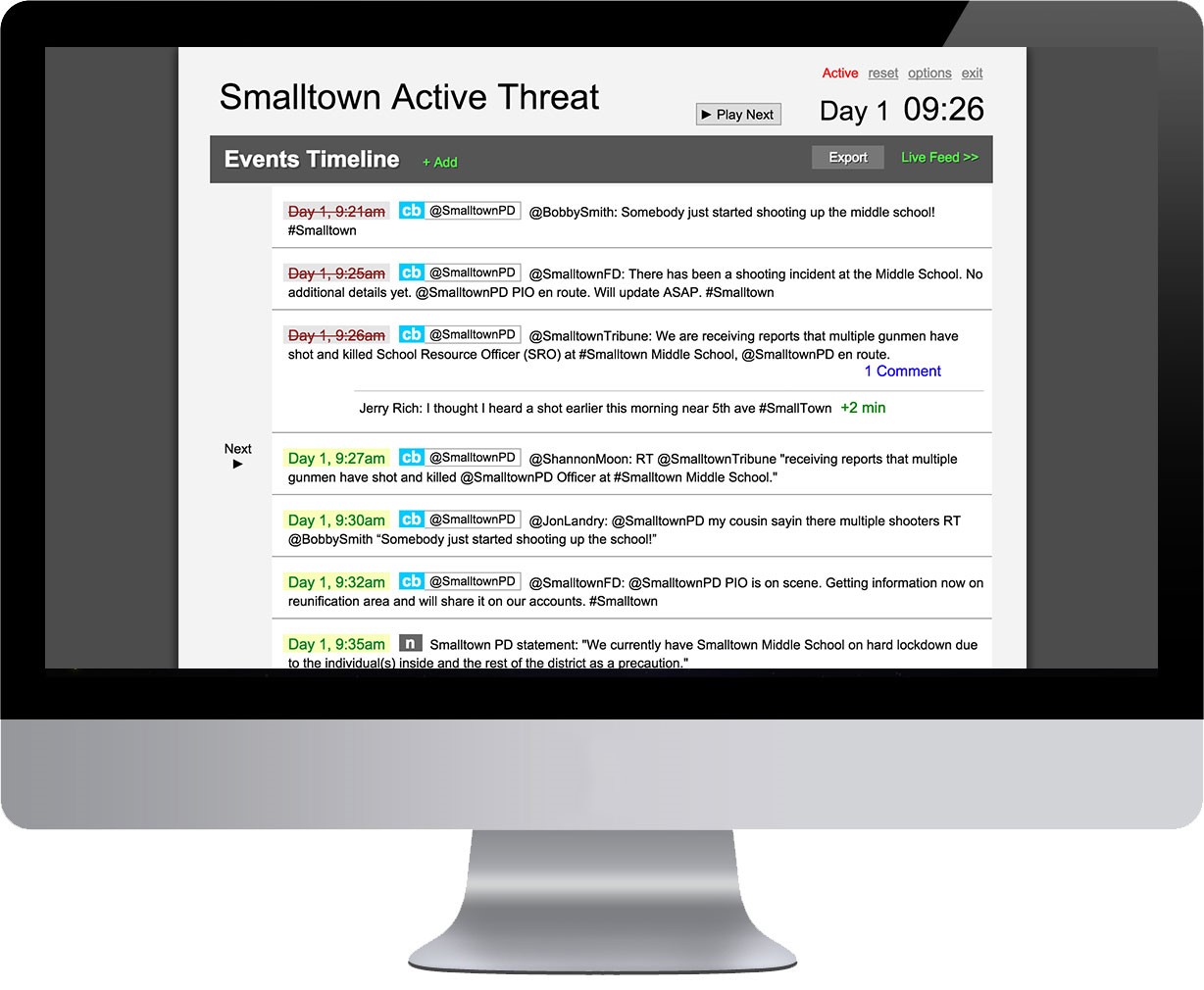
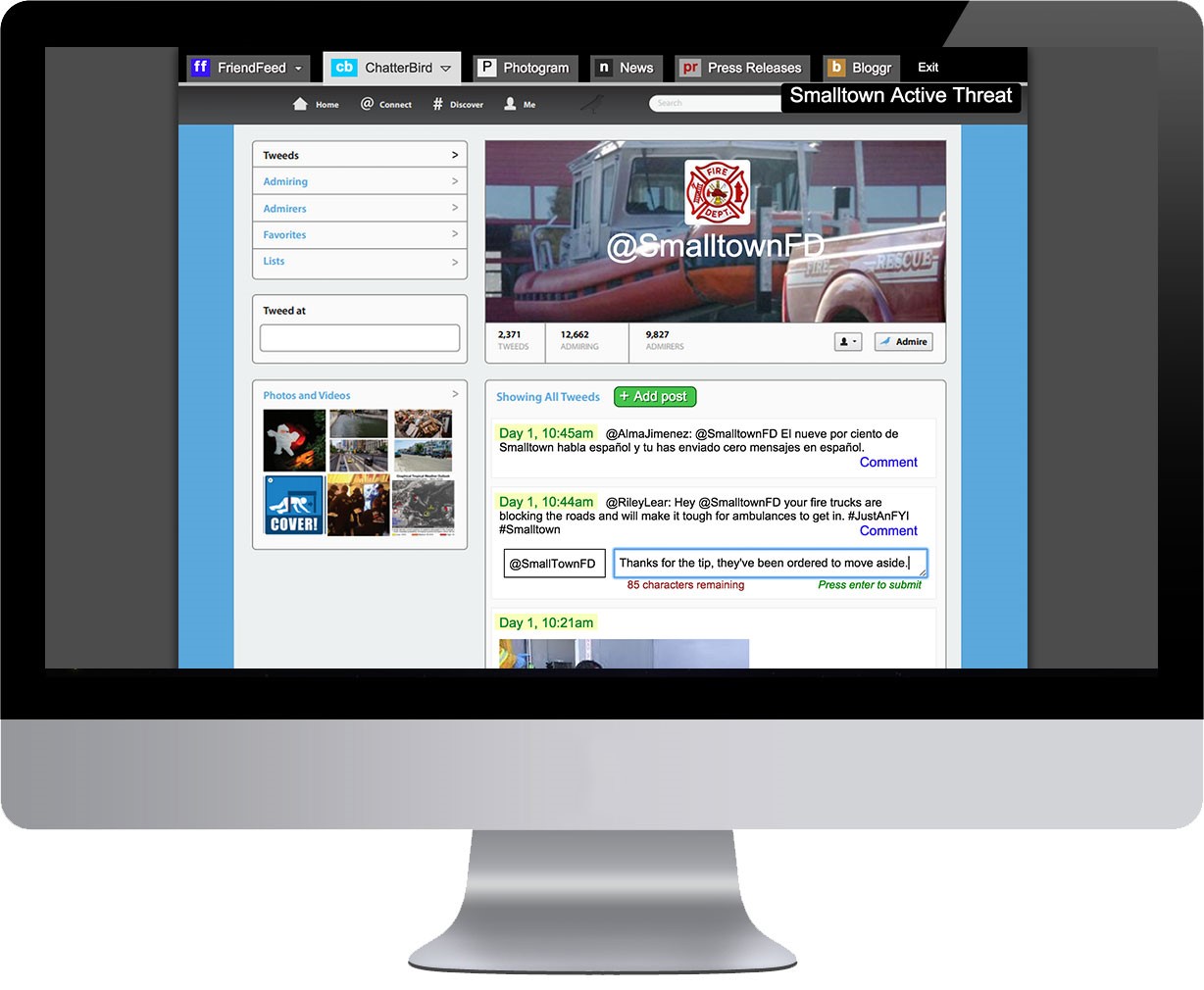
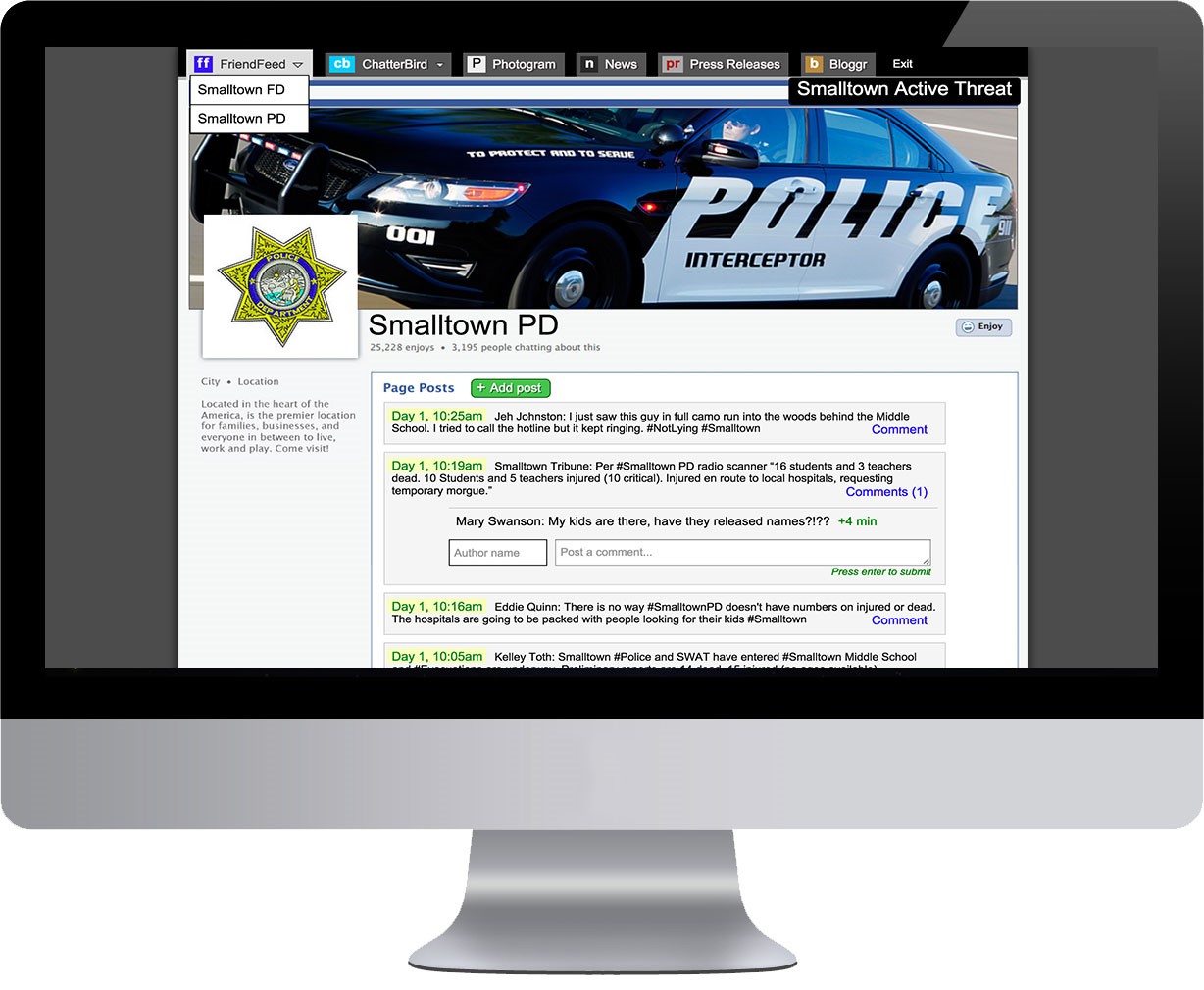
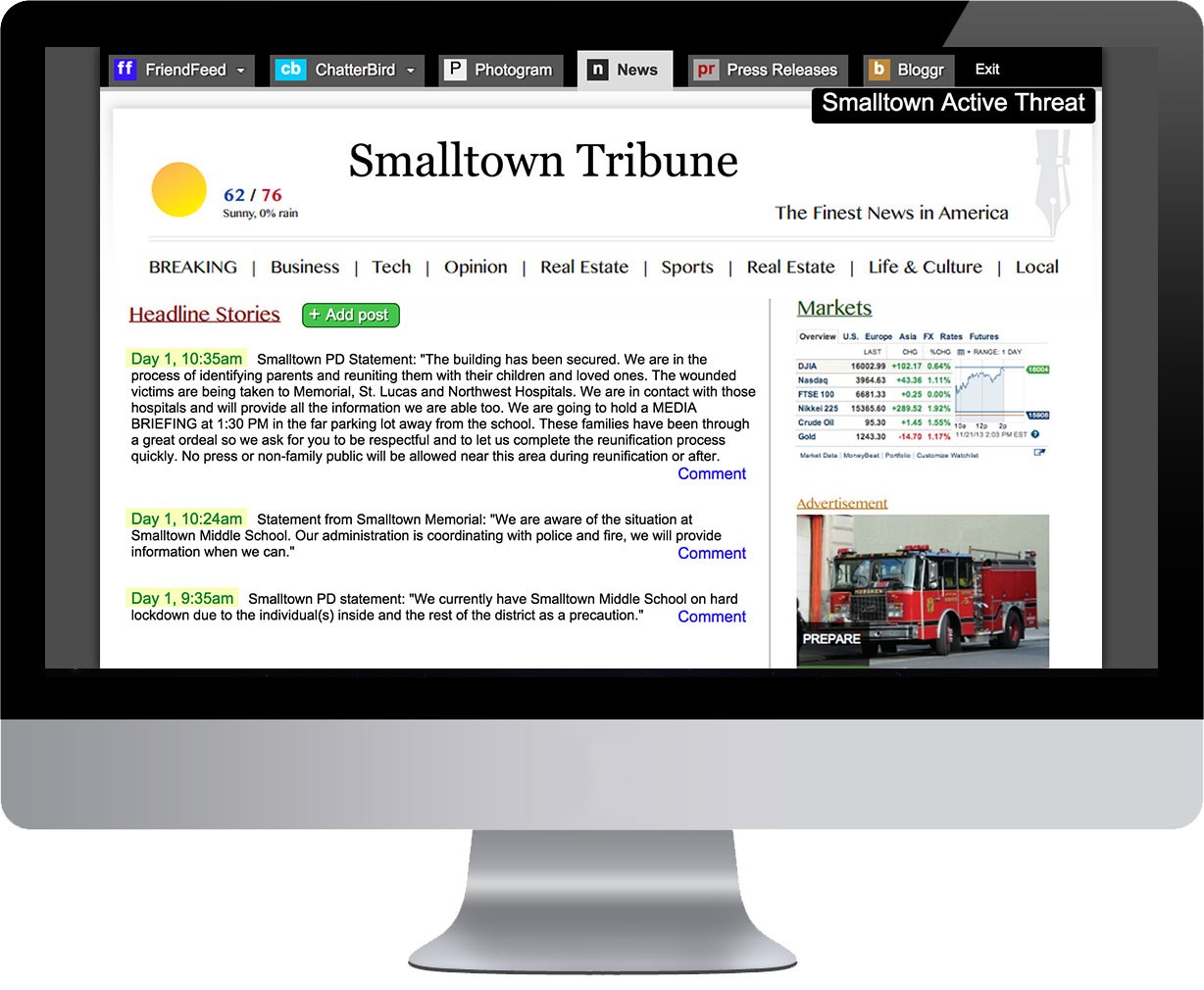
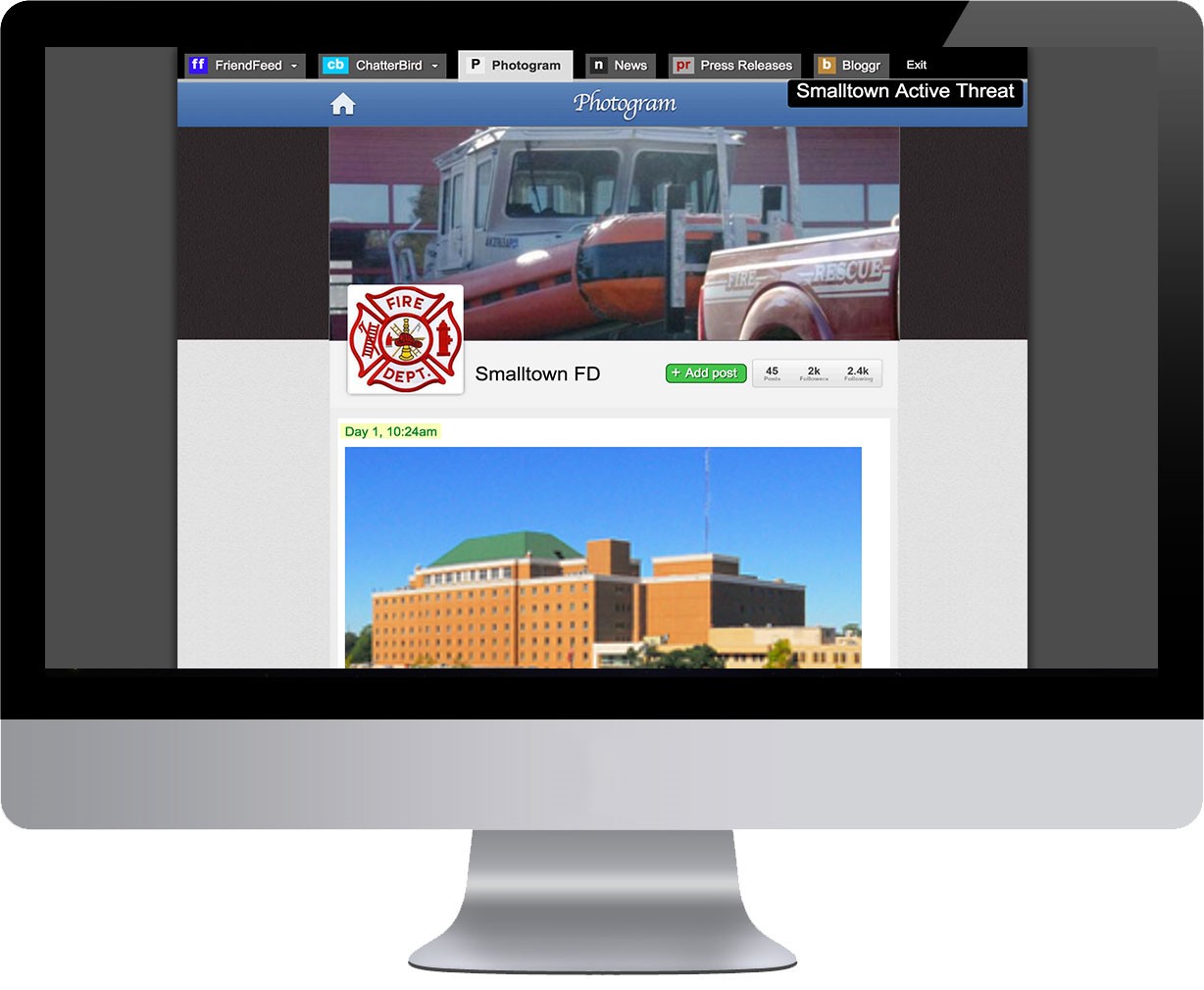
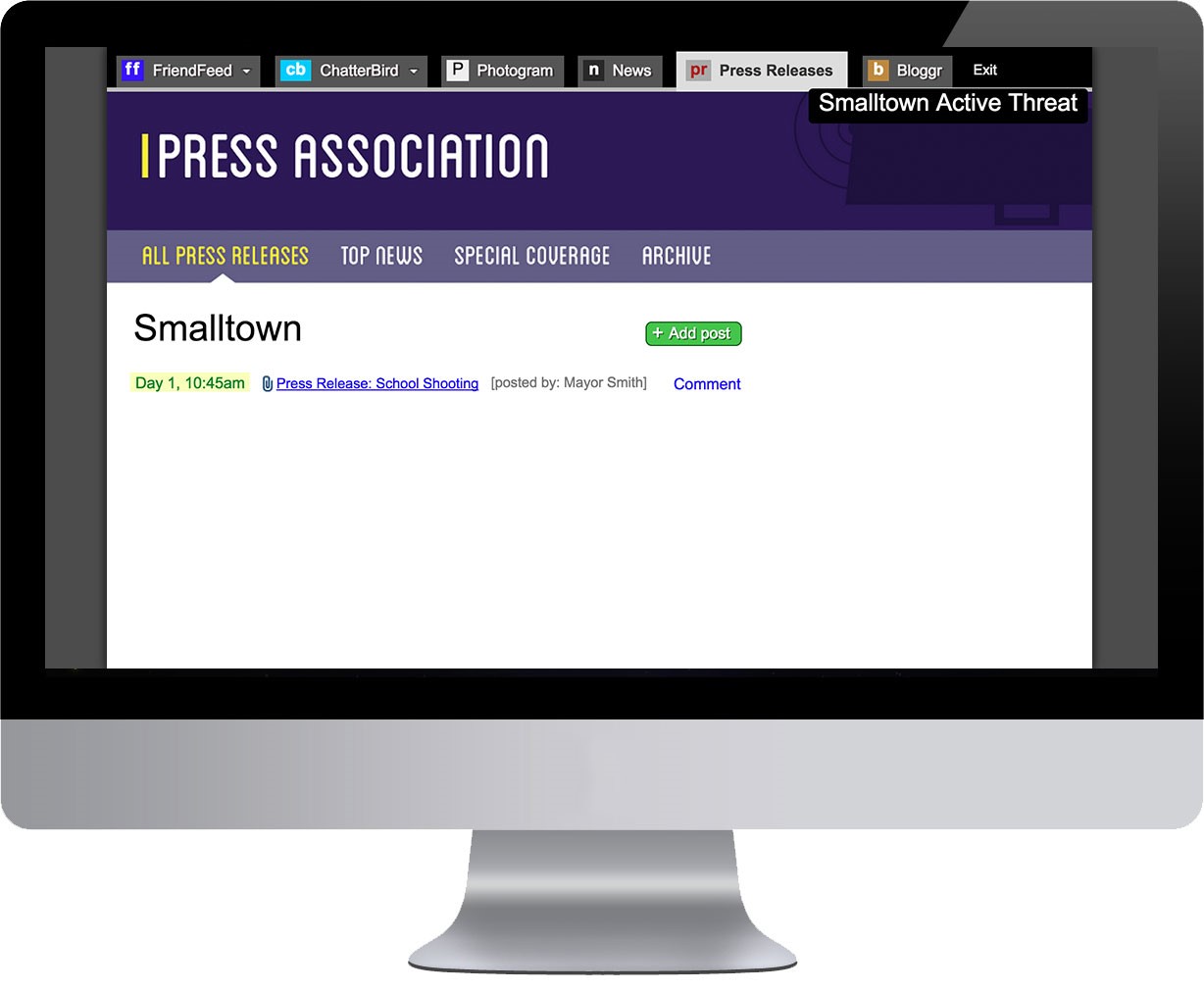
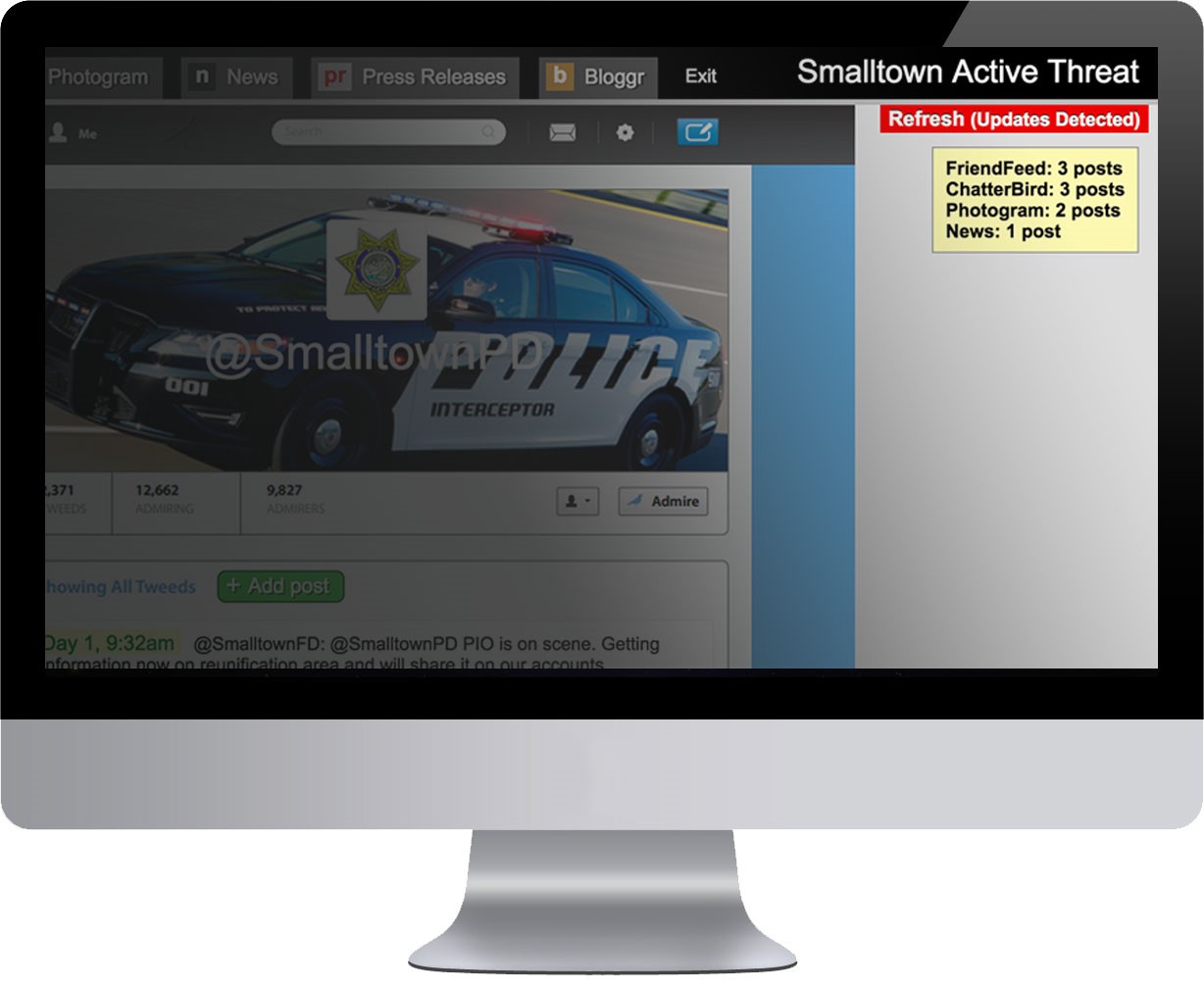
If you want to test different types of social media accounts such as all the Twitter accounts in your jurisdiction, EMSocialSimulation makes it easy to create multiple accounts on each simulated social media platform. It has accounts for FriendFeed (Facebook), ChatterBird (Twitter), Photogram (Instagram), News (Simulated Media Posts), and Press Releases.
Many of you in the public sector may be asking if the tool is aligned with HSEEP as you may be required to follow this methodology. Because EMSocialSimulation is just a simulation platform (not a methodology), this is the wrong question to be asking. EMSocialSimulation merely helps you execute HSEEP designed and developed exercises or other types of exercises related to social media. As such, it is aligned with HSEEP, but is certainly not an HSEEP methodology tool. You would plan an exercise just like you would normally and then use EMSocialSimulation to simulate the social media capabilities under the Public Information / Public Affairs emergency support function.
Hagerty has mostly been using EMSocialSimulation to support their existing clients and as a result is not as self-service oriented I would have liked to see it, especially as it has been in use for over twelve months. For example, you still have to go through a sales process with them and have them bulk upload injects, unless you want to do each one by hand. They also have inject templates available and are creating more for different hazards and scenarios; but again, you must still go through your Simulation Coordinator in order for these templates to be accessed and uploaded.
The video below walks you through EMSocialSimulation as well as Hagerty's social media exercise design and development process.
I am excited to see, though, that they allow the export of all simulation data for analysis. Most of the data can be analyzed by someone with some basic Excel data and analytic skills. However, Hagerty will also provide this type of analysis as a service. One data point they capture that might be useful is the response time between when a message was posted vs. responded to. This can help you identify if response times are within your guidelines or help you determine if there was a problem with the social media response timing as a whole.
Overall, I would recommend this tool to organizations and jurisdictions just beginning their foray into social media messaging and response. I would not say this is your Cadillac platform for social media simulation and it won't scale to thousands of tweets easily. But it should suffice and be all that is needed for many in the emergency management community. Just don't be scared off by the design of the tool looking like it was built in 2005. It still has the power you need it to have.
In the comments below, I would interested in knowing your social media training and exercise challenges? What has been your experience with other tools?
I also asked Corey to answer some additional background questions you might finding interesting:
What is your name and role in the Organization?
My name is Corey Mulryan and I am the Simulation Coordinator and simulation content developer for EMSocialSimulation (EMSS). I work with clients to develop the simulation, and if needed, help run the application on the day of the exercise.
What does your tool do?
EMSS helps users practice the use of social media in a realistic, safe, and secure environment. EMSS helps identify gaps in plans and operational structures where internal policies and procedures. Finally, EMSS is scalable, which results in cost effectiveness and customization.
What/who inspired you to create this?
Social media is here to stay and its role in emergency management has become a matter of expectation, not the exception. As an example, a client of ours asked if there was a way that we could incorporate social media into their exercise. We questioned our typical response and that sparked the innovation. We researched current solutions and found that they were not meeting the need. Some examples observed included low tech options like sending a fax or email with simulated social media messages or creating private accounts on live systems, but that is not realistic and is risky, not to mention a lot of work for our clients. Other high tech solutions seemed overdone, expensive, and outside of clients reach.
The Hagerty team started discussing social media and that its inclusion should be the standard, the same way we don’t think twice about following or including Homeland Security Exercise Evaluation Program (HSEEP) in every exercise. We wanted to provide our clients with an opportunity to practice social media, familiarize themselves with process and approach, and see how social media could be incorporated into what they do during normal operations and response.
What challenge does your tool help customers overcome?
Emergency Managers and first responders know they should be using social media. The University of San Francisco’s 2013 study on using social media identified that “80% of Americans expect emergency response agencies to monitor and respond on social media platforms, additionally, 33% expect help to show up within just 60 minutes of a post.”
Those numbers are a wake-up call. A public expectation has been established and EMSS helps meet this challenge by training staff and demonstrating to management the benefits of using social media in disaster response. During Hurricane Sandy, “the American Red Cross had 23 staffers monitor over 2.5M Sandy-related social media posts.” Agencies cannot hope that one person will be able to handle social media alone, EMSS allows them to cross train multiple staff members to build knowledge and trust within an agency. EMSS allows players to remain engaged during a longer exercise with a steady flow of information that we try to keep interesting.
How does it do this?
EMSS hosts replicas of common social media platforms that can be customized based on the objectives of the engagement. Players are able to make posts and comment in a way that looks and feels real. Of course, all of this is controlled in a secure environment by the Simulation Controller. EMSS does not link to any social media platforms so there is zero chance that any messages sent or posted during a simulation will end up on an agency’s actual accounts. The Simulation Controller will develop injects to test various responses from the players. This can be issuing information, responding to requests, monitoring traffic, or anything else. The Simulation Controller will then upload injects in accordance with the exercise timeline and be able to respond to players in real time. After the simulation is complete, the Simulation Controller can export the data to an After-Action Report/Improvement Plan.
What is next for the tool?
This tool can really help people, we have seen it firsthand. We want to continue to help users experience social media in their training and exercise endeavors, and to bring the whole concept to life. We want this to foster the development of internal procedures and integration of social media into communications standards. We want to continue this process and work to better identify how social media is used to monitor situations, communicate with residents and stakeholders, share information, and reach the whole community. EMSS has been used geographically across the country, with events ranging from a tabletop to a full-scale exercise. This tool is available for an affordable price and can include multiple stakeholders or formats, such as training, exercise, or simulation.
How can people get in touch, learn more or test the tool?
If anyone is interested in EMSS they can go to our website for more information www.emsocialsimulation.com. On the website they can fill out the contact us form at the bottom or send an email directly to emsocialsim@hagertyconsulting.com. We will quickly respond and schedule a demo and discuss the application.

Idiot's Guide to Reddit
In many cases, we all need the simplest possible explanation for something. It is a fact of life that no matter how hard we try to "get it," we are stymied until we hear it explained to use like we are in elementary school.
This was the case for me not too long ago. It happened to be for Reddit, "a type of online community where users vote on content to take part in a reddit community." Call it a mental block or simply glazing over the obvious, I just couldn't wrap my head around this type of user community and how it could be used in general as well as for disaster management.
I found two great videos that led me to my aha moment and succinctly explain what Reddit is and how it works:
The first time I experienced Reddit's prominence was in the aftermath of the Boston Marathon Bombings. Reddit users upvoted article(s) that incorrectly identified a suspect. This reporting was grossly negligent and contributed significantly to rumors that should never have gotten the attention they did.
In many cases, we all need the simplest possible explanation for something. It is a fact of life that no matter how hard we try to "get it," we are stymied until we hear it explained like we are in elementary school.
This was the case for me not too long ago. It happened to be for Reddit, "a type of online community where users vote on content to take part in a reddit community." Call it a mental block or simply glazing over the obvious, I just couldn't wrap my head around this type of user community and how it could be used in general as well as for disaster management.
I found two great videos that led me to my aha moment and succinctly explain what Reddit is and how it works.
The first time I experienced Reddit's prominence was in the aftermath of the Boston Marathon Bombings. Reddit users upvoted article(s) that incorrectly identified a suspect. This reporting was grossly negligent and contributed significantly to rumors that should never have gotten the attention they did.
The incorrectly identified suspects were subjected to unthinkable online (and offline) bashing and scrutiny. In one case, the person Reddit users identified was a student that had gone missing a month prior to the bombings. My heart breaks for the family that had to endure such speculation while praying for their son's return!
While you may not use Reddit in your every day jobs, it is very important to understand the tools that your citizens and the wider public uses. You may have new opportunities to conduct rumor control before things spread like wildfire as well as have the opportunity to engage your citizens in new ways. Take the time to understand how Reddit works, it may be just what you need one day.
How You Can Help 'Crowdsource' Typhoon Yolanda Response (UPDATED)
Update. This blog post has been updated since its original posting to provide additional background on MicroMappers' two primary initiatives (TweetClicker and ImageClicker) and provide additional explanation.
Update 2. As of 9am Eastern on 11/13, no more Tweets and images are being added to the applications. However, you can still view results on the crisis map.
Typhoon Yolanda hit the Philippines this past Friday as one of the largest and most powerful storms ever recorded on earth. Many initiatives are underway to support response efforts. However, if you would like to support response efforts with your time and energy rather than donating, MicroMappers, at the request of the United Nations Office of Humanitarian Assistance (UN OCHA), has stood up two applications to help quickly identify ("tag") information from tweets and images relevant to disaster responders.
TweetClicker and ImageClicker are both simple to use "microtasking" applications to verify Tweets and images gathered from social media. The goal is to leverage the "crowd" to help sift through the massive amounts of data collected. Each application requires no technical expertise and can even be used on your computer or mobile device. The application runs you through a simple tutorial before beginning. Each message takes about 3 seconds to review and will get reviewed by two other people, so your selections will be validated by others as well.
NOTE: If you encounter a "100% complete" notice when navigating to the pages, keep checking back every hour. The applications are adding new messages and images to verify continuously.

The results of this effort are being displayed on a live crisis map supported by the StandbyTaskForce and GISCorps, which are both members of the Digital Humanitarian Network. Each of these groups are network of people and organizations with missions to support the formal and informal response.
In the response to Hurricane Yolanda/Haiyan, they are digitally skilled volunteers acting as force multipliers. Conceptually, they are similar to Red Cross's Digital Operations Center that leverages digital volunteers to support response efforts. However, describing these organizations and how they operate is a separate post.
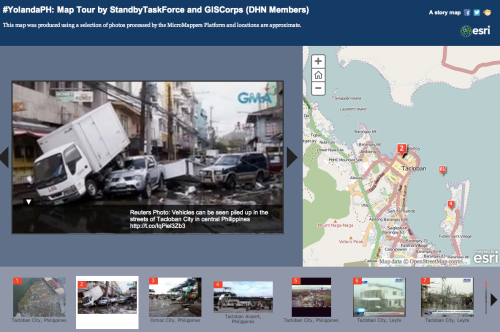
Leading this effort, though, is MicroMappers. The initiative (loosely defined) is a partnership between QRCI, CrowdCrafting, and UN OCHA and is led by a number of industry technologists including Patrick Meier, Ji Lucas, Luis, Daniel, Ariba Jahan, Christine Jackson, and Daniel Lombrana Gonzalez.
For more background and continuous updates on Typhoon Yolanda/Haiyan response efforts using TweetClicker and ImageClicker, check out this blog post.
Related articles
- Typhoon Yolanda: UN Needs Your Help Tagging Crisis Tweets for Disaster Response (irevolution.net)
- After Yolanda, int'l community offers sympathy, aid (rappler.com)
- UN, gov't send communications teams to Tacloban (rappler.com)
- Super-Typhoon Haiyan (Yolanda): How Can We Help? (jacksaunsea.wordpress.com)
White House Poised for Further Innovation with "Design Jam"
I had the distinct pleasure attending a White House design jam (think "design-a-thon") on Disaster Response and Recovery with over 90 colleagues from all over the tech and innovation space last Tuesday. Honorable mentions include Microsoft, Google, NYC Digital, Twitter, Airbnb, Twilio, Topix, LiquidSpace, Reddit, Rackspace, Palantir, DirectRelief, Recovers.org, APCO International, and Singularity University to name a few. And yes, FEMA was there along with a couple White House Presidential Innovation Fellows!
Here is a quick description of the event:
The event, to be led by Todd Park, US Chief Technology Officer, and Richard Serino, Deputy Administrator of FEMA, will convene leaders in technology, design, academia, entrepreneurship, and philanthropy, as well as local and state officials to develop ideas for innovative solutions to emergency management challenges.Participants will brainstorm creative new solutions and ways to support the development of prototypes for some of the best emerging ideas. Solutions will focus on: empowering disaster survivors; enhancing the ability of first responders as well as Federal, state and local officials to conduct critical recovery and restoration activities; and supporting integrated, whole-community efforts to better prevent, protect, mitigate, respond to, and recover from disasters.
We spent most of the day "jamming" to not just discuss, but actually create designs. We worked through a cycle that included problem definition, design & build, test & evaluate, and iterate. At the end of the day, we chose team captains to spearhead ongoing development efforts.
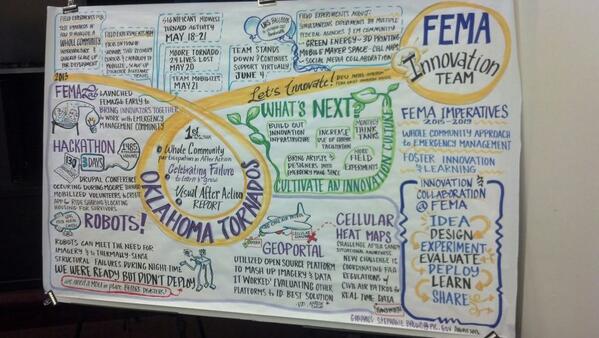
There were a number of fabulous projects that, if continued, could really help us leap frog forward. Here are a few:
- DisasterRSS - Creation of a "disaster.txt" publishing standard & ontology for websites (like RSS for blogs). This simple idea is for any organization that has data or information useful in disasters. The organization would create a .txt file on its website that would have all relevant information for data geeks and others to access its data. Here is a very basic example.
- SMS Survivor Survey - Designed to get specific information from specific population groups, the simple prototype simulated sending a short text message survey to a list of durable equipment owners with a tree of questions asking for their current location and the battery needs for their life-saving medical devices. That information is then saved for disaster responders to deliver aid for the folks that need it. This model can be adapted to a variety of use cases . Check it out by texting (415) 236-3575.
- Disaster Response Data Interchange - Geographically aware data interchange that will intelligently aggregate disaster recovery information from social media and other sites. The system will include Customer Relationship Management (CRM) functionality to autonomously engage “customers” to connect the “haves” with the “wants” across multiple sites. Additionally, it will have an Application Programming Interface (API) that will allow third parties to push/pull information automatically into and out of the data interchange.
Check out the full Storify here.
So what is your opinion on what we need to go from innovative ideas to action and sustainability?
Smartphone Apps, the Next Step for Emergency Management?
I love the idea of mobile first strategy when it comes to applications. We are increasingly virtual and need the flexibility our phones offer to input and receive relevant information.My question, though, is is a mobile application by jurisdiction the best way to go since the public and other citizen responders are not bounded by jurisdiction, but rather geography?
Hurricane #Sandy: Resources on Twitter for All States
Check out this amazing list of Twitter handles for Hurricane Sandy....http://blog.twitter.com/2012/10/hurricane-sandy-resources-on-twitter.html
Hurricane #Sandy Geotagged Social Media Maps w/Photos...Thanks @Geofeedia!
Geofeedia is releasing a number of regional maps that aggregate geotagged social media such as photos and videos on a map. I highly recommend checking this out for real time visual information. Here is the message from Geofeedia...
Since the storm is expected to hit a large geographic area, we have created several regional Geofeeds which should help you to hone in on your particular areas of interest.
Here are a couple of other hints and suggestions as you cover the storm:
1. Draw your own smaller, more-targeted Geofeeds. These will leverage the data Geofeedia is already discovering in the background.
2. Want to see more photos? Turn off Twitter under the settings menu. There are A LOT of photos, but the significant volume of tweets can sometimes push them down in the queue.
Westchester and Fairfield Counties, New York
Philadelphia and Atlantic City
Norfolk and Virginia Beach, VA
To all of our customers and friends on the East Coast, good luck and stay safe.
Best regards,
The Geofeedia Team
How NOT to Use Hashtags & RTs in a Crisis
How NOT to Use Hashtags & RTs in a Crisis via Glen Gilmore & Social Media: How NOT to Use Hashtags & RTs in a Crisis.