It's Official, I am Blogging at EmergencyMgmt.com
A couple weeks ago I was asked by Emergency Management to join them as a blogger. When I got the call to join the publication I jumped at the chance to share my thoughts with many others.
As of today, I am pleased to announce my own blog section at emergencymgmt.com. I will continue blogging about resilience, innovation and technology on both websites, but each will have different content.
Here is a link to my intro post at Emergency Management.
How can you stay in touch...
You can follow my writings in four ways
A couple weeks ago I was asked by Emergency Management to join them as a blogger. When I got the call to join the publication I jumped at the chance to share my thoughts with many others.
As of today, I am pleased to announce my own blog section at emergencymgmt.com. I will continue blogging about resilience, innovation and technology on both websites, but each will have different content.
Here is a link to my intro post at Emergency Management.
How can you stay in touch...
You can follow my writings in four ways:
- Visit DisasterNet.co and Emergencymgmt.com
- Grab the RSS Feed for DisasterNet.co and EmergencyMgmt.com
- Follow me on Twitter!
- Sign up for the DisasterNet Newsletter.
The email newsletter is published every Friday with a curated set of posts from around the internet related to resilience, innovation, and technology. Emails are also sent out when I publish new posts, regardless of the website I posted to.
Have a question or topic you want me to cover? Get in touch with me!
Want to know about my background? Here is a short bio.

Idiot's Guide to Reddit
In many cases, we all need the simplest possible explanation for something. It is a fact of life that no matter how hard we try to "get it," we are stymied until we hear it explained to use like we are in elementary school.
This was the case for me not too long ago. It happened to be for Reddit, "a type of online community where users vote on content to take part in a reddit community." Call it a mental block or simply glazing over the obvious, I just couldn't wrap my head around this type of user community and how it could be used in general as well as for disaster management.
I found two great videos that led me to my aha moment and succinctly explain what Reddit is and how it works:
The first time I experienced Reddit's prominence was in the aftermath of the Boston Marathon Bombings. Reddit users upvoted article(s) that incorrectly identified a suspect. This reporting was grossly negligent and contributed significantly to rumors that should never have gotten the attention they did.
In many cases, we all need the simplest possible explanation for something. It is a fact of life that no matter how hard we try to "get it," we are stymied until we hear it explained like we are in elementary school.
This was the case for me not too long ago. It happened to be for Reddit, "a type of online community where users vote on content to take part in a reddit community." Call it a mental block or simply glazing over the obvious, I just couldn't wrap my head around this type of user community and how it could be used in general as well as for disaster management.
I found two great videos that led me to my aha moment and succinctly explain what Reddit is and how it works.
The first time I experienced Reddit's prominence was in the aftermath of the Boston Marathon Bombings. Reddit users upvoted article(s) that incorrectly identified a suspect. This reporting was grossly negligent and contributed significantly to rumors that should never have gotten the attention they did.
The incorrectly identified suspects were subjected to unthinkable online (and offline) bashing and scrutiny. In one case, the person Reddit users identified was a student that had gone missing a month prior to the bombings. My heart breaks for the family that had to endure such speculation while praying for their son's return!
While you may not use Reddit in your every day jobs, it is very important to understand the tools that your citizens and the wider public uses. You may have new opportunities to conduct rumor control before things spread like wildfire as well as have the opportunity to engage your citizens in new ways. Take the time to understand how Reddit works, it may be just what you need one day.

White House Innovation Demo Day - Recap of Best Posts!
On July 29th, 2014, the White House held an Innovation for Disaster Response and Recovery Demo Day. Over 1,500 people participated online and in-person and I got to meet so many people that I have known online for years. Needless to say, the day itself was great, but the connections and conversation with everyone in attendance was amazing.
Several people have written summaries and opinions of the event. I thought it would be great to capture a number of them in one blog post.
On July 29th, 2014, the White House held an Innovation for Disaster Response and Recovery Demo Day. Over 1,500 people participated online and in-person and I got to meet so many people that I have known online for years. Needless to say, the day itself was great, but the connections and conversation with everyone in attendance was amazing.
Several people have written summaries and opinions of the event. I thought it would be great to capture a number of them in one blog post.
From the White House:
“On Tuesday, more than 250 emergency managers, first responders, tech entrepreneurs, and local, state, and Federal officials came to the White House to participate in the Innovation for Disaster Response and Recovery Demo Day. The event was live-streamed to more than 1,250 people interested in leveraging tech and innovation to improve disaster preparedness, response and recovery.”
They also published a Demo Day fact sheet that includes summary descriptions of all the presentations.
From Kevin Sur (@rusnivek):
“My takeaways from the morning workshops? We need to continually evaluate the preparedness efforts in each community as there is no constant. Aside from quantifying preparedness (which is almost virtually impossible), we need to seek alternate ways to better serve our communities including ones who have distinct challenges.”
From Cheryl Bledsoe (@CherylBle):
“Rather than Creating Technology Solutions, Government Should Develop Trust & Meaningful Engagement with Tech Developers - Emergency responders should not be making technology and conversely, technology providers should not be leading the emergency response. For years, we have seen public agencies recreate the technical wheels of ideas that were often first birthed in the private sector. For example, government has attempted versions of social networks and damage reporting tools that look similar to both Facebook and Instagram, but few of the public apps have ever caught on in the public sphere like the ones more widely accepted. We have to develop trust and meaningful engagement between both groups so that people can lend their expert perspective into the development of technology and so that we are truly solving problems in a meaningful way.”
From Elaine Pittman (@elainerpittman) at Emergency Management Magazine:
White House Innovation Day Highlights Disaster Response, Recovery
“Emergency managers converged with the tech community in Washington, D.C., to discuss tools that can create more resilient communities and also positively impact disaster preparedness, response and recovery. The White House Innovation for Disaster Response and Recovery Initiative Demo Day on July 29 showcased new innovations in both government and the private sector that aim to aid the survivors of large-scale emergencies. ”
Disaster Information Management is NOT a Technical Problem
On one of the email listservs I belong to, I am having a spirited conversation about why disaster information management is so hard. I wrote the article (that sparked the conversation) nearly a month and a half ago to describe many of the non-technical challenges related to disaster information management and technological innovation, of which there are many.
In short, the article gave an overview of challenges at the Community, Agency and Individual levels and highlighted information flow impediments such as:
- Inaccessibility
- Inconsistent Data and Information Formats
- Inadequate Stream of Information (Shortage/Overload)
- Low Information Priority
- Source Identification Difficulty
- Storage Media Mismanagement
- Unreliability
- Unwillingness
If you are thinking the above list are technical challenges, though, think again....
On one of the email listservs I belong to, I am having a spirited conversation about why disaster information management is so hard. I wrote the article (that sparked the conversation) nearly a month and a half ago to describe many of the non-technical challenges related to disaster information management and technological innovation, of which there are many.
In short, the article gave an overview of challenges at the Community, Agency and Individual levels and highlighted information flow impediments such as:
- Inaccessibility
- Inconsistent Data and Information Formats
- Inadequate Stream of Information (Shortage/Overload)
- Low Information Priority
- Source Identification Difficulty
- Storage Media Mismanagement
- Unreliability
- Unwillingness
If you are thinking the above list are technical challenges, though, think again. These are all challenges that can be overcome with the support of technology, but are really challenges with community and organizational policy and operations. They have to do with how communities and organizations approach their disaster information workflows and processes and how they enact policies that enable the adoption and diffusion of new technological innovations.
Much more research needs to be poured into this area to better understand the community and organizational factors and conditions leading to effective information management and technological innovation. In fact, a whole line of research needs to dedicated solely to this issue.
This issue is also deeper than anyone thinks. If your community or organization is not set up with the proper information policies and operational workflows and processes, technology will continue to be more of a hindrance than help. You will have significant cost overruns related to implementation and training and end up with sub-par products that don't quite meet your needs.
The value proposition of technology will also continue to decline and everyone will suffer as the world gets more complex and the need for effective information sharing grows exponentially. You will end up with yet another tool that works in a vacuum and is wildly insufficient for the highly interdependent world of disaster management that relies heavily on citizens and partners to formulate an effective and efficient response.
Of course, what does it mean to have the "proper information policies and operational workflows and process?" This is a very important question and one that everyone should start looking at very closely. I am exploring this in my research, but the issue is far greater than one PhD student.
So, I want to know from you...What do YOU think communities and organizations should do to solve this problem? What steps should they take? What is the roadmap to get there? What else do we need to know about how we use disaster information?
3 Reasons Why Disaster Information is SO Important
For all the talk about about how we need better information delivered in better ways, I am struck by how easily people lose sight of why it is needed in the first place. After all, information that you don't need is really not helpful and can cause big problems. You can experience information overload, be distracted from your goals or tasks, or be unduly influenced by extraneous information.
Whether you are looking for information before, during or after disasters, there are three reasons why good information is important:
1) Situation Awareness - Information helps responders understand the situation
Information helps us identify operational gaps and enables us to effectively coordinate resources. Knowing the gaps along with what is going on and who is doing what is the heart of situational awareness. Without good awareness, though, it can feel like you are making a decision in a vacuum or hedging your bets on risky decisions more than you would like.
For all the talk about about how we need better information delivered in better ways, I am struck by how easily people lose sight of why it is needed in the first place. After all, information that you don't need is really not helpful and can cause big problems. You can experience information overload, be distracted from your goals or tasks, or be unduly influenced by extraneous information.
Whether you are looking for information before, during or after disasters, there are three reasons why good information is important:
1) Situation Awareness - Information helps responders understand the situation
Information helps us identify operational gaps and enables us to effectively coordinate resources. Knowing the gaps along with what is going on and who is doing what is the heart of situational awareness. Without good awareness, though, it can feel like you are making a decision in a vacuum or hedging your bets on risky decisions more than you would like. Generally speaking, the more situational awareness you have, the more you know that you are not duplicating effort and are prioritizing the right issues.
Good situational awareness strikes the right balance between information deficiency and information overload. It also incorporates three levels of information (Endsley, 1995):
- Perception - Knowing the elements of the situation and environment that are pertinent to your job. They can include things like situation monitoring and cue detection that helps inform your own picture of what is happening.
- Comprehension - Relating and synthesizing the information from Level 1 against the decisions you need to make and your overall objectives. At this state, you put your perception information into context with your response objective(s) and decision(s) to better understand the situation.
- Projection - Relating to what might happen and one's ability to see the possible trajectories of the events taking place or decisions you make. You need to have perception and comprehension of the current situation in order for future projections, anticipations and estimates to be effective.
2) Decision Support - Information helps responders make better decisions
For some decisions, a general knowledge of what is going on and who is doing what is not sufficient. General information about the situation won't suffice as you need more specific and focused information to make complex and important decisions. The goal is to make the best decisions given the information at your disposal that will result in the best outcomes. For example, choosing to initiate a community-wide evacuation is a big decision with many variables. A decision support tool that manages information effectively can help you project the impact of a storm (and impact of evacuation) and help you make the decision whether evacuation is the best course of action. Additionally, knowing the capabilities of and the potential for secondary impacts (i.e., residual flooding) to possible shelter locations will greatly inform your choice of shelter openings.
3) Outcome Metrics - Information helps us know if we are [being] successful
Information is the key commodity in the feedback loop that shows the failures/success of our decisions and interventions. Just because a decision is made doesn't automatically mean that the decision and approach is effective. Continuous feedback is important to take corrective action in a timely manner. But information doesn't just show success OR failure. The information that is most useful is usually in between the two in some fuzzy area that requires contextualization and understanding of the dynamics of the situation. Outcome metrics in disaster management is very difficult and incorporating them take time and experience.
For example, what if you begin to experience an unanticipated surge of people on the road at 5pm that are clogging your 2 major arteries? Is evacuation a complete failure? No. But does this perhaps require a different approach? Perhaps you might add additional law enforcement and tow trucks to help keep traffic moving or develop an on-the-spot traffic management plan for a 3rd artery. But your pre-established metrics indicate that you can still safely evacuate everyone in time because 10,000 people have already left and there is only 3,000 more to go. As a result, your decision to re-appropriate resources might change. (NOTE: This is merely an example. I am not advocating for letting people "sit" in their cars on the highway if that can be avoided. This also does not fully address the breadth of "outcome metrics" and how they can be used most effectively)
4) BONUS - Information as aid
Collecting information for your own situational awareness and decision making is a rather selfish way of thinking about information. Information is really a form of aid to the public as well as your response partners. Information is vital to their success as well. In addition, disseminating good information in the right formats (i.e., machine readable, real-time access, social media, etc.) for your audience(s) helps improve the community's outcomes as well. They need information just as much as you do to accomplish their priorities and objectives. The more they are self-sufficient and armed with the right information, the less burden you carry to take care of others.
Does this jive? Why else is information important to you?
![[REPORT] Assessing Your Organization's #SMEM Capabilities](https://images.squarespace-cdn.com/content/v1/53a9cfb7e4b0ac3522f6060f/1404844244127-ZILU7NV7DPFZSANQJPSQ/224195765+SMEM+Canadian+Project+Final+Document+2.png)
[REPORT] Assessing Your Organization's #SMEM Capabilities
There have been a great number of reports released over the years related to Social Media in Emergency Management (#smem). In May of this year, the Defence Research and Development Canada, a agency of Canada's Department of National Defence, released a brand new report specifically addressing the assessment of SMEM capabilities for emergency management agencies.
Needless to say, this report is one you should take the time to read. It has a lot of great information and included input from notable names such as Patrice Cloutier and Pascal Schuback. Both of them have been talking about this subject for quite some time.
In the report, they proposed an SMEM maturity model and examined several case studies such as the 2010 Haiti earthquake and Hurricane Sandy in 2012. For each case study, they looked at SMEM capabilities by people, governance, technology and implementation. I embedded the full report below.
There have been a great number of reports released over the years related to Social Media in Emergency Management (#smem). In May of this year, the Defence Research and Development Canada, a agency of Canada's Department of National Defence, released a brand new report specifically addressing the assessment of SMEM capabilities for emergency management agencies.
Needless to say, this report is one you should take the time to read. It has a lot of great information and included input from notable names such as Patrice Cloutier and Pascal Schuback. Both of them have been talking about this subject for quite some time.
In the report, they proposed an SMEM maturity model and examined several case studies such as the 2010 Haiti earthquake and Hurricane Sandy in 2012. For each case study, they looked at SMEM capabilities by people, governance, technology and implementation. I embedded the full report below. If you want a quick read, here is the report abstract:
“Emergency management and first responder organizations around the world are trying to exploit the use of social technologies to prepare for respond to and recover from crisis. Social media offer the opportunity to connect and cooperate with the networked public, take advantage of the capabilities and innovations of virtual volunteers, and to reach people quickly with alerts, warnings and preparedness messages. Canada’s emergency management community has not yet fully embraced social media. This report describes an effort to understand the state of maturity of the use of social media in emergency management as well as to create a “roadmap” for an effective use of this capability in Canada. The research involved conducting an environmental scan, consultations with experts and case study analysis. We found that there exists an awareness and expertise gap between the community of internationally experienced virtual volunteers and the emergency management organizations in Canada and that the potential of social media and online collaboration remains unfulfilled. One of the main challenges to implementing an effective capability is resolving how to bridge the command-and-control, hierarchical culture of emergency management organizations to the horizontal, networked culture of the digital domain. The report offers suggestions on how to improve and mature the implementation of social media in emergency management in Canada”
This report also reminds me of the recent report I helped contribute to related to SMEM. In this report, we tried to tackle issues beyond public engagement, such as how we can use social media for situational awareness and decision support. There is a lot of momentum building in this area and I am excited to see more and more information on how to implement SMEM in a practical and realistic way.
I highly recommend taking a look at these two reports. If you know of any others, please post below or send them my way!

Why is Disaster Information Management So Hard?
Information is one of the most important commodities in disaster management, including for operations and public awareness. In recent years as the size, scale and complexity of disasters have increased dramatically, the need for information systems that help us effectively manage information is more important than ever. As such, we need to consider the relative strengths and weakness of humans and computers and understand the totality of information issues that we encounter as an industry.
But we are only beginning to scratch the surface on how to get the right information to the right people at the right time in the right way. Theoretically this should be an easy task.
Information is one of the most important commodities in disaster management, including for operations and public awareness. In recent years as the size, scale and complexity of disasters have increased dramatically, the need for information systems that help us effectively manage information is more important than ever. As such, we need to consider the relative strengths and weakness of humans and computers and understand the totality of information issues that we encounter as an industry.
Carver, L., & Turoff, M. (2007). Human-computer interaction: the human and computer as a team in emergency management information systems. Communications of the ACM, 50(3), 33–38.
But we are only beginning to scratch the surface on how to get the right information to the right people at the right time in the right way. Theoretically this should be an easy task. But the reality is that we operate in complex and dynamic environments that make effective information management difficult. We rely heavily on our experience and expertise to get us through disasters; and our existing technical systems (in design and practice) tend to reflect organizational priorities rather than the full-scope of inter-organizational and community-wide objectives.
There is so much more possible if we can think more strategically about how we manage and share information during a response. What if information could play a larger and more central role in our decision making? What if we had all the information at our fingertips to make the best decision? What if there was one dashboard we could see everything that our jurisdiction neighbors are doing, what resources are deployed or waiting for assignment, and what missions are awaiting resource assignment? And what if we could then take action and have the system automatically update for everyone?
First, though, we need to understand some of our existing information sharing problems. Then we can begin to look at other issues in systematic ways and develop truly meaningful information management solutions. Looking at the different parts of information management individually is simply inadequate for our complex and dynamic information needs. There are many reasons for this and I highlight a couple of the challenges below.
Bharosa and Janssen (2010) provide a great overview of information sharing issues based on different levels of the problem. At the community level, they show that organizational silos are present and there is a lack of incentive for inter-organizational information sharing. At the agency or organization level, there is a reliance on protocols and information sharing up and down the operational hierarchy. At the individual level, there are problems with information overload, not knowing what to share, ability to process information and overall information quality.
Bharosa, N., Lee, J., & Janssen, M. (2010). Challenges and obstacles in sharing and coordinating information during multi-agency disaster response: Propositions from field exercises. Information Systems Frontiers, 12(1), 49–65. doi:10.1007/s10796-009-9174-z
Contrastingly, Day, Junglas and Silva (2009) identify more mechanistic problems with information sharing and narrow down the issues to eight key impediments surrounding information collection, processing and sharing. Many people have experienced one or more of these impediments in their operations as they attempt to gain situation awareness and make good decisions. As you develop your information management strategy for your organization, consider how each of your systems hinders or improves these impediments.
Day, J. M., Junglas, I., & Silva, L. (2009). Information flow impediments in disaster relief supply chains. Journal of the Association for Information Systems, 10(8), 1.
There are also issues with knowing when information is needed and by whom. I also suspect there are many opinions and thoughts on this.
I would really like to hear from you about your challenges with information? What are they? What do you think the root cause is?
P.S. This is largely the subject of my research and I hope to contribute a lot more to this discussion in the next year. I always equate this issue to trying to peel back the layers of an onion; once you peel back one layer, you find there are many more layers to go!
![[NEW REPORT] Using Social Media for Enhanced Situational Awareness and Decision Support](https://images.squarespace-cdn.com/content/v1/53a9cfb7e4b0ac3522f6060f/1404246926192-8NVOSY9D607ZH4SO3NV7/Social+Media+Study.jpg)
[NEW REPORT] Using Social Media for Enhanced Situational Awareness and Decision Support
After a long effort by the DHS Virtual Social Media Working Group (VSMWG), the report Using Social Media for Enhanced Situational Awareness and Decision Support was just released on Tuesday. I was very happy to be a part of developing this report among many other talented people.
The report also discusses issues that extend well beyond social media. The report highlights many of the issues we face related to disaster information management as a whole. If you have questions about big data, social data, data interoperability, this report is your primer.
After a long effort by the DHS Virtual Social Media Working Group (VSMWG), the report Using Social Media for Enhanced Situational Awareness and Decision Support was just released on Tuesday. I was very happy to be a part of developing this report among many other talented people.
“The report introduces ways social media platforms can be used for situational awareness in public safety. It addresses various challenges associated with the use of social media for situational awareness, the integration of social media within the operational environment, and identifies areas requiring further consideration, research, and development.”

The report also discusses issues that extend well beyond social media. The report highlights many of the issues we face related to disaster information management as a whole. If you have questions about big data, social data, data interoperability, this report is your primer.
“[The report] also identifies critical areas requiring further consideration and research to address key technology, process, and policy gaps, including:”
- "Information Application: The ability to access, share, search, verify, contextualize, and manage available information. This concept also includes the identification of essential elements of information in social media as they relate to traditional public safety information requirements.
- Privacy, Legal, and Security Challenges: There are several challenges associated with the use of social media for situational awareness, especially with regards to user privacy and the use of personally identifiable information (PII); the need to remove details when sharing information across multiple partners; and the security of networks, platforms, tools, and data.
- Data and Open Standards: To truly enhance situational awareness, social media must be integrated, both technically and contextually, within the larger information environment and into the public safety operational workflow. Additional considerations include event detection, data formats, data models, ontologies, semantic and linked data, automation, and artificial intelligence.
- Technology Development: Challenges associated with the use of third-party platforms, analytics tools, the development of operational requirements, the ability to geo-locate information published to social media, spatial-temporal characteristics (disparate and virtual communities, time decay of posts, etc.), and integration with NextGen911 will require further research. "
The DHS VSMWG also published a great report in May 2013: Lessons Learned: Social Media
and Hurricane Sandy. This group is doing great things and trying to push the ball forward with social media and technology.
I hope you take the time to read through this report. Look forward to you comments and feedback!
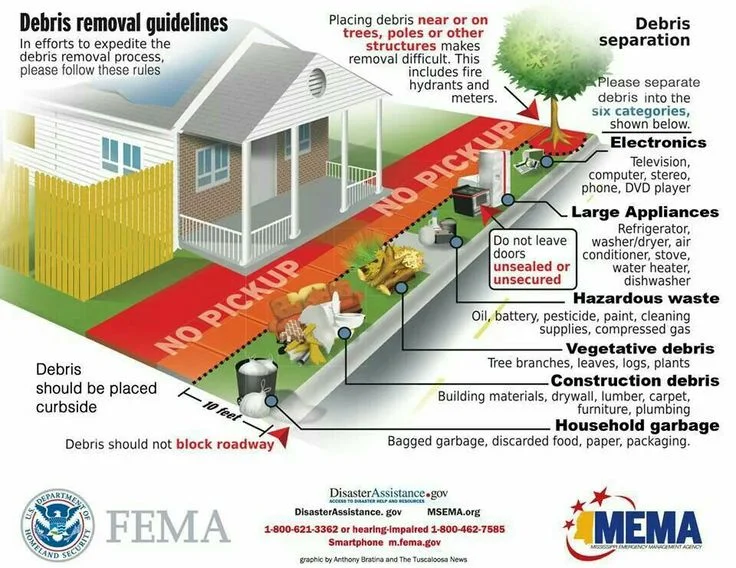
6 Great Disaster Infographics
Disaster statistics and information have been around for while, but rarely have they been presented in such ways that grabs someones attention. Infographics are a new visual way of presenting information in a easily digestible graphic. They are usually static in nature, but present a finite set of information in some sort of story line.
I would highly encourage you to use them in the mix of your social engagement strategy. They are a great way to connect with your audience in a way that doesn't bore them to death!
I put together six great disaster infographics to check out!
Disaster statistics and information have been around for while, but rarely have they been presented in such ways that grab people's attention. Infographics are a new visual way of presenting information in a easily digestible graphic. They are usually static in nature, but present a finite set of information in some sort of story line.
I would highly encourage you to use them in your social engagement strategy. They are a great way to connect with your audience!
I put together six great disaster infographics to check out:
The Global Katrina Effect - Deadline Extended for Paper Submissions!
I just found out that the deadline for papers has been extended to Friday, June 20, 2014. This is a great opportunity to submit papers you have been working whether you are in academia or are a practitioner.
"Since the goal of the symposium is to advance new ways of understanding the impact of Hurricane Katrina through a cross-national comparative examination of case studies, proposals should adhere to the following structure: 1) highlighting what happened during Hurricane Katrina regarding a specific subject area; 2) reviewing changes in institutions, procedures or law in the United States as a result of lessons learned from Katrina in this sector and 3) identifying how other countries adapted their emergency management systems/policies post-Katrina and whether these innovative changes might be utilized by the US and other countries. Interdisciplinary studies are particularly encouraged."
CALL FOR PAPERS
The Global Katrina Effect: An International Research SymposiumCenter for Disaster Research & Education
Millersville University of Pennsylvania, USA
October 1 – 3, 2014
August 2015 will mark the tenth anniversary of Hurricane Katrina, considered to be one of the defining historic events within the emergency management field in the United States. Accordingly, this anniversary will prompt numerous reflective academic assessments of how this disaster, which struck the Louisiana and Mississippi Gulf Coasts, changed the US emergency management landscape thereafter. Less known, however, is the impact that Hurricane Katrina had on disaster management systems in other countries --over a variety of subject areas ranging from emergency preparedness to coastal management to vulnerable populations to companion animals. To highlight the global lessons drawn from Hurricane Katrina, Millersville University will host an international research symposium on October 1-3, 2014 which will bring together policymakers, practitioners and academics from around the world. This interdisciplinary gathering will take place over a three-day period during which juried scholarly papers will address how other countries modified their disaster response institutions, practices or policies after the initial American mismanagement of the Katrina crisis came to light.
via Millersville University - Center for Disaster Research & Education.
Really, What is Situation Awareness?
We talk about situation awareness a lot. In fact, it permeates a lot of our central assumptions and decisions. It also impacts how we strategize about our operations and planning, especially as it relates to information management. So really, what is situation awareness? How does it relate to information management?
Situation awareness is the primary conceptual tool that disaster personnel use to manage all the information that disasters create. Endsley (1988) describes situation awareness as “the perception of the elements in the environment within a volume of time and space, the comprehension of their meaning and the projection of their status in the near future.” According to Endsley (2000), situation awareness is a distinct stage from decision making and the subsequent performance of actions. Endsley (1995, 2000) defines three levels of situation awareness leading to decision making and the performance of actions:
- Level 1 – Perception of current situation,
- Level 2 – Comprehension of current situation, and
- Level 3 – Projection of future status.

Harrald and Jefferson (2007) add that in emergency management, data interoperability leads to a common operating picture, which then leads to situation awareness. These concepts are intricately linked and build off one another. Endsley (2000) points out that situation awareness “is a state of knowledge about a dynamic environment. This is different than the processes used to achieve that knowledge.”
As situation awareness is achieved, though, employing a decision aid such as John Boyd's OODA loop helps decision makers make the right decisions. Originally developed for military application, the OODA loop has application across a wide range of situations. It has four central components: 1) Observe, 2) Orient, 3) Decide, 4) Act.

So if our goal is to achieve good situation awareness so we can make better decisions, where do we begin?
Researchers such as King (2005) focus on how knowledge management concepts can be used to categorize disaster information needs of decision makers. Knowledge management has close ties to situation awareness as they both deal with the effective use of information. However, situation awareness uses knowledge management concepts to inform decision makers specifically in highly dynamic and mission critical environments. According to the King (2005), “[k]nowledge management is the systematic process and strategy for finding, capturing, organizing, distilling and presenting data, information, and knowledge for a specific purpose and to serve a specific organization or community.” He bases his categorization on the needs of decision makers as a whole and finds there are four different types of knowledge types that decision makers seek out:
- Situational
- Background
- Operational
- Analytical
This categorization is quite high level, though, and does not fully address the range of decision making information needs. In addition, the ability to find, capture, organize, distill and present data, information and knowledge is quite challenging in practice. King (2005) points out the challenges organizations face:
“Information is constantly changing, comes from a multitude of sources and is often incomplete or contradictory. In some cases, there is an overload of information and, in other cases, there are complete gaps in what we know. Collecting information is often difficult, if not impossible, because of inaccessibility to the affected areas due to natural hazards, insecurity or government restrictions.”
Zhang et al. (2002) adds:
“Relief agencies are slowly developing the infrastructure to undertake effective information and knowledge management. A huge amount of information is collected but not efficiently used. Despite advanced technology achievements, many decision are still taken in emergencies with little information beyond that in people’s heads.”
Information management is inherently complex. Overcoming this complexity is a key challenge for our future as more and more information becomes available, especially in real-time. So what approach will yield the greatest effort-to-outcome ratio in improving information management? I think the we still have a ways to go on this, but simply categorizing and typing all available information is also impractical, costly, and causes strategists and technologists to lose focus on important and high value contributions.
So what are your thoughts on situation awareness? Does this jive with your interpretation? What are the challenges you face in practice?
Real-time Social Analytics for Disaster Response and Emergency Management
I had the great pleasure of meeting the SocialAI team in February when they demonstrated their social analytics tool for disaster management to a key audience of practitioners and technology enthusiasts. The team comes from the well-known Georgia Tech Research Institute and are participating in the Humanitarian Technology: Science, Systems, and Global Impact Conference taking place this May 13-15 in Boston, MA. If you are interesting in the subject of humanitarian technology and happen to be in the area, I highly recommend that you attend to check out SocialAI and the host of other tools working in this arena. Their exhibit is titled: Real-time Social Analytics for Disaster Response & Emergency Management.

The analysis they are doing related to social media in disaster management is quite remarkable. But they have a big mission ahead of them as they attempt to make social network theory and social media analysis relevant for practitioners. This is a near universal problem this industry faces and SocialAI is one of the key players making progress in the area.

Check out more about their research as well as the team on their website. As they develop the system more, I know they will be looking for more practitioner feedback. This is a vital component of the system and it won't be as effective as it could be with your support.
Also, what thoughts do you have on the system? What kinds of social network information do you seek in your operations?
Social Media and Situational Awareness at a Joint Interagency Field Exploration
This article was first published in the April issue of the IAEM Bulletin and highlighted lessons learned from a Joint Interagency Field Exploration that put technologists and decision makers in the same room to achieve new possibilities. Mary Jo Flynn was the 1st author. I supported this article as a 2nd author. We both participated in the event.
High impact and high visibility disasters have increasingly revealed the proliferation and widespread use of mobile devices, social media, photos, videos, and other sensory data and channels as information sources. This information can be helpful in planning for, responding to, and recovering from disasters and emergencies. The amount and speed of available information, however, in addition to a lack in ability to identify, verify, aggregate, coordinate, and contextualize information gleaned from social media, leaves data often unused and un-actionable.
The JIFX
To address technology gaps across a variety of disciplines, including information sharing, the U.S. Department of Homeland Security Science and Technology Directorate, in partnership with the Office of the Secretary of Defense and the Naval Postgraduate School, hosts the Joint Interagency Field Exploration (JIFX). Each quarter, JIFX participants utilize different methods of interaction, all of which focus on end user input, which reflects and address the most complex challenges identified by those directly engaged in homeland defense and security. JIFX 2014-2, held at Camp Roberts, Ca., February 10-13, offered participants an opportunity to participate in an experiment looking at the usefulness of social media and data to address agency mission objectives and pre-existing information requirements to achieve enhanced situational awareness and decision support.
Participants
Members of the DHS Virtual Social Media Working Group, including individuals from Anaheim [Ca.] Emergency Management, San Francisco Department of Emergency Management, Johnson County [Ks.] Sheriff, New York City Office of Emergency Management, George Washington University, Wright State University, Humanity Road, U.S. Health and Human Services, U.S. Northern Command, the National Guard, and many others participated in a three day event to test how useful information gleaned from social media sources could have been during Hurricane Sandy, if it had been easily available. Several technology companies participated as well, offering their tools for the purposes of testing how to identify, leverage, integrate, and visualize social media and other types of data within an operational environment.
Scenario
The scenario was based on factual data identified from actual events in Hurricane Sandy, and included several “moves” that spanned the pre-event, onset and response, and recovery phases of the incident and included weather conditions, storm effects on Critical Infrastructure and Key Resources (CIKR), ongoing response efforts, population actions, and social media. Participants and technologists worked together to identify what type of information, if any, could be leveraged from additional sources to inform emergency response decision-making during the event. The group focused on specific information needs from within these various areas, specifically focusing on mission requirements, applicable keywords, potential thresholds to assist with prioritization of available information, the essential elements of the information needed including technical specifics (e.g. detail, format, update frequency, visualization method, etc.).
As the exercise played out, participants concluded that the data available, which had been stripped of personally identifiable information (PII), was not detailed enough to produce a clear picture of events as they unfolded. Difficulties arose as well, in the discussions between the technologists and the participants (end users) regarding the specific objectives, requirements, and applications of the available technologies. It became apparent that there was a significant disconnect in concept, meaning, and terminology that must be addressed in order to support future technology development.
Since the exercise plan was already built around a storm scenario, the group decided to switch to a live event, the Nor’easter poised to hit Atlanta, Georgia and the East Coast, on February 12 and 13. The exercise was modified to allow all technologists to perform work in teams while subject matter experts provided information on data needs for decision making and appropriate visualizations. Subject matter experts provided a real-world link to actual impacted communities through Humanity Road, which officially activated to support response to the event, and other connections established during the exercise.
Lessons Learned
The transition to a live scenario proved informative as technologists attempted to adjust their solutions to the needs of emergency managers in real-time. One key finding was that technologies need focus on 1) anomaly and change detection and then 2) enable the decision maker to inquire further about other potential impacts or why such a change or event is taking place. Another key finding was that while automated search may help to build situational awareness, full accounts are still best made by the experts who can contextualize information better and faster than information systems. Despite decisions still being held by an individual, the technologies at the JIFX provided significantly greater insight into the awareness of the situation when integrated with other data sources and technologies.
Participants identified several additional lessons learned, including:
- The need to identify information requirements, both individually, and in “packages” (e.g. groups of information that, together, satisfy various questions). there is a need for better categorization and discoverability of available data to ensure potential resources are identified prior to an event;
- Mission objectives must be pre-identified and defined to align with technical requirements to ensure technology is leveraged effectively.
- Establishment of baseline monitoring capabilities will be useful in determining the occurrence of events, or anomaly detection.
- While automation of analysis will help in minimizing the time required to identify useful information, manual input and/or consideration will help to ensure the veracity and applicability of found information.
- Definition of relationships between multiple information sources, including cascading effects and additional information requirements, will assist in further contextualizing information as it relates to the operational environment at hand.
- Due to the volume of data available, filtering queries as defined by pre-existing mission and information objectives may prove more useful than filtering all results.
Conclusion
The shift from scenario to live event clearly demonstrated a need for real-time analysis of technologies to accurately determine the usefulness of tools. Additionally, the removal of all PII presented a challenge to government agencies needing crucial life-saving information; additional consideration is necessary in order to best identify how to move forward in trend analysis, ensuring information that is accessible, whether limited by various policies and legal considerations, is used efficiently and effectively.
Public Safety Practitioners Needed for Hackathon...Tech Skills NOT Required
I just came across a fairly well-funded and notable hackathon taking place in Washington, DC May 2-3. The event is looking for public safety practitioners to help guide development. No technical knowledge or skills are required, just an interest in furthering mobile application development in public safety. This is a great event for first timers to get their feet wet in this domain and network with other people and organizations.
Sponsors and participants include a range of people from Google, AT&T, Apperian, McAfee, the Department of Homeland Security and many others. Here is the intro:
Building on commercially available software, leveraging APIs from AT&T, Apperian, Google, and McAfee and engineering support from these tech powerhouses, you’ll be able to work with some of America’s finest with actual police, fire, and EMS communications experts on hand from the Association of Public Safety Communications Officials (APCO) to help you conceptualize solutions and work through some of these unique and exciting Public Safety challenges. Additionally, you will have application security experts from Department of Homeland Security assisting you to enhance the function, performance, and security of your application that is critical to public safety.
Teams can win up to $10,000 centered around four main challenges:
1) Communications: Mobile communications are essential to public safety. Interoperable voice, video, and information sharing between all personnel, which often includes responders from different disciplines and jurisdictions would dramatically enhance response efficiency and safety. Communication must be convenient and reliable. The right person having the right access at the right time to sensitive information is essential. How can your creation provide seamless and straightforward communications capabilities for public safety?2) Situational Awareness: Public safety users must be aware of their surroundings and access to the most up-to-date information in order to make the best real-time, tactical decisions. However, too much information can inhibit decision-making. Reducing distractions and focusing on the outputs of data analysis can help the first responder react appropriately in a high-stress, disorderly environment. How can your creation provide data to the first responder to quickly identify relevant and actionable information about their situation or environment?3) Augmented Reality: First responders can benefit from an enhanced view of the environment while in the field. This view may be supplemented by interactive map overlays, multi-user awareness, virtual browsing, and/or virtual showcasing. For instance, a tool could give these professionals information that would not otherwise be visible (example: “seeing” other responders, electrical wires, stand pipes, through obstructions) could be valuable for emergency response and first responder safety. How can your creation help to provide an augmented reality experience for the user?4) APCO Location Challenge: Option 1 - The existing 9-1-1 network has been designed to automatically identify a mobile 9-1-1 caller’s location however, on occasion the location information of a mobile 911 caller is not accurate or not sent in a timely manner to the Public Safety Answer Point (911 Call Center). How can your application assist Public Safety Answering Points (PSAP) receive accurate and timely information so they can better respond to emergency calls?Option 2 - Emergency responders live in an inherently mobile environment – but their work is often done in collaboration. Thus location of first responder assets is critical to any emergency operation. To that end, how can your application help provide location-based information to a first responder in the field about his/her location, the location of others in their cohort, and give permissioned access about that information to their command (i.e. PSAP)?
For more information and to register, check out the event website.
Attend the Best Conference for Information Systems in Disaster Management
During May 18-21, 2014, Penn State University will be hosting the 11th annual Information Systems for Crisis Response and Management (ISCRAM) Conference. ISCRAM is an international community promoting research and development, exchange of knowledge and deployment of information systems in the field of crisis management. The May conference is expecting to draw approximately 300 attendees.
You are encouraged to engage the expert panelists on the following four topics.
- Super Typhoon Haiyan: the Information Management Disaster?
- Crowdsourcing Crisis Response: The Boston Marathon Bombing
- Doing IT Right: Ethical, Legal and Social Issues of IT Supported Emergency Response
- Creating a Common Operational Picture (COP) with the Crowd
At last year’s ISCRAM conference, the headline topics were holistic crisis management as well as the need to close the gap between scientists and the practitioners. It is envisioned that ISCRAM 2014 will advance these discussions as the organization positions itself to take a leadership role to reframe information systems for emergency response and crisis management scenarios.