
Redefining Information Requirements for Crisis Response
Developing information requirements for crisis response is a tedious and flawed process filled with many uncertainties about the situation and the response. While we can take an honest stab at knowing what different responders need, when, and how, our unilateral focus on needed information stymies the best of intentions: historical learning is only as good as a similar future, which is rarely the case; and visioning workshops are only as good as the ability to identify the uncertainties that lie ahead, a very difficult task with severe consequences if something is missed.
While decisions can be made without needed information based on expertise and experience, this is far from ideal in a complex adaptive system such as...
Developing information requirements for crisis response is a tedious and flawed process filled with many uncertainties about the situation and the response. While we can take an honest stab at knowing what different responders need, when, and how, our unilateral focus on needed information stymies the best of intentions: historical learning is only as good as a similar future, which is rarely the case; and visioning workshops are only as good as the ability to identify the uncertainties that lie ahead, a very difficult task with severe consequences if something is missed.
While decisions can be made without needed information based on expertise and experience, this is far from ideal in a complex adaptive system such as crisis response (another important topic, but no room in this post!). Every move one makes (small or large) can have significant positive and/or negative impacts on system performance, not to mention possible interaction effects of different decisions and actions. Information is therefore a lifeline for decision makers when evaluating the consequences of different decisions and actions. Information provides important cues that help decision makers develop accurate representations of the system and the situation in order to better leverage their expertise and experience.
In more certain work environments with repeatable tasks, decisions, and problems (e.g., manufacturing), information requirements can be refined through thorough investigation and iterative development. But crisis response is far more uncertain about the tasks, decisions, and problems that will be encountered. Planning activities can help, but they will never be 100% ready. Unanticipated situations will always be encountered for which one must react in the moment. Additionally, information are often not created and available until a crisis occurs, so it is hard to plan for its use.
We need a dedicated strategy and approach to information management (collection, processing, and sharing of data/information) that balances flexibility with standardization and that extends beyond technical interoperability (similar to our response management paradigms). People, policies, programs, processes, and products all need to align to inform and improve the handling of the known-knowns (e.g., will set up a point of distribution), the known-unknowns (e.g., how public will react), and the unknown-unknowns (e.g. unforeseen circumstances) encountered during a crisis response.
This is not an easy endeavor and requires radically different thinking that embraces the uncertainty associated with crisis response. We are doing ourselves a disservice if we focus on predictable information needs in an environment where the most valuable information is unpredictable!
Tackling this issue will likely take the better part of my career, but it is important to start somewhere. As you consider your information requirements, I suggest you consider the following information requirement types:
Type A - Clearly Needed Information
First, it is important to outline the information that is clearly known to be needed. Bite off the top layer of information needed by each role. These are the absolutes that you know the role(s) need to have. Be judicious, though, as your information management plan will most definitely provide you with ALL this information and you don't want to overload responders.
Type B - Likely Helpful Information
Second, consider what information should not be delivered, but rather immediately available to responders if they decide they need it. This is information one could presume might be needed, but is hard to define when, where and how it will be useful. This information should be made available and easily accessible to responders without distracting or overloading them.
Type C - Supporting Information Sources
Lastly, because it is unlikely that you will have envisioned all possible information needs, consider how your responders can access different sources of information that will allow them to find the information they need on the spot. This is hard as you need to build relationships and technical integrations ahead of time to execute well.
There are two things to notice about my suggested information requirement types. First, I call them types rather than levels. This is because the relationship between them is dimensional, not linear or hierarchical. Type C information can be just as important as Type A information. Second, they assume a "role-based" perspective on information requirements gathering. Collecting information requirements at an organizational level obfuscates the information needs of individual responders who are the true consumers of information. Plus, if you know the role-based information needs of individual responders, you can more easily discern the organization's overall information needs through aggregation and comparison of all the information required in each role. This then sets you up to develop an information system that meets organizational needs through knowledge of individual responders' information needs.
I hope this helps you expand your understanding of requirements gathering and rethink what is "needed" in light of the many uncertainties that crises bring. The goal here is to intentionally and strategically approach information management such that you are giving your responders the best possible chance of obtaining available information they need, when and how they need it. I don't address the timing aspects and delivery methods of information needs here, but they are indeed also very important (perhaps another blog post!).
I look forward to your comments!

Curate Dashboards NOT Documents in Disasters
The goal of any information or intelligence unit in a disaster is to produce information useful for decision makers. Information managers, though, curate and analyze information into static and overly-standardized reports that are hard to interact with and update with new and different data and information.
Instead, information managers should focus on publishing information into dynamic dashboards that can be further manipulated by disaster decision makers at their convenience. This is because decision makers may want to quickly...
The goal of any information or intelligence unit in a disaster is to produce information useful for decision makers. Information managers, though, curate and analyze information into static and overly-standardized reports that are hard to interact with and update with new and different data and information.
Instead, information managers should focus on publishing information into dynamic dashboards that can be further manipulated by disaster decision makers at their convenience. This is because decision makers may want to quickly probe information directly if they find something potentially alarming. If it requires more analysis, sure, it can be sent back to the situation or intelligence unit. But a 1 minute prob may have just satisfied all of the disaster decision makers concerns, especially when time is a luxury.
On the plus side, your customer base likely won't change as you much as you think. In fact, most of what should change is your mindset on how to convey data and information. For example, instead of creating five reports for five groups of people, you are now working to curate five dashboards for the same five groups. The tools may differ, but the process of creating useful information outputs will be similar. Information managers may still need to collect, organize and analyze data and information, but now there are new and better ways to present it.

Tableau Dashboard
There are plenty of software solutions that support dynamic dashboards, both online and offline. Tableau, Splunk, and Palantir are some of the leading providers. The danger, though, comes when you develop a dashboard before a disaster and have no plans to optimize and update it during a disaster. This optimizing and updating must be incorporated into your response operations in order to provide more useful dashboards based on real-time feedback.
This real-time curation and updating mindset is a shift from the report publication cycles that are often aligned with operational periods. It enables information managers to provide the most up-to-date information to disaster decision makers. This is especially needed when operational periods differ across the many organizations involved in a response.

In many cases as well, you are able to develop automated processes that streamline the collection, organization and analysis of data an information. This allows information managers to focus on presenting available information that is most useful to disaster decision makers rather than spending significant amounts of time processing data and information.
Anyone who has dealt with data understands that data and information processing (e.g., obtaining, scrubbing, exploring, modeling and interpreting) is very time-consuming, but necessary. Any chance to automate processing allows you to focus more on presenting available information in more useful ways to the people who need it.
If dashboards are not yet an option or on your radar (for whatever reason), consider getting into this mindset in your next exercise or response. How would you become more "dynamic"? How would present information in more useful ways? What tools would you use?

Information Management & Sharing...the Right Way
If you have ever responded to a disaster, you have likely made an infinite number of decisions and taken an infinite number of actions. Information has informed these decisions and actions in some way. However, had the information been delivered in the right way at the right time, you probably would have been more efficient and effective with your time. Having the information in the right way allows you to spend more time mastering your objectives rather than mastering the art of data and information management.
Situation Reports (SitReps) are a great example of information delivered in a more usable way. However, SitReps were created in an era when paper documents reigned supreme and when that was the best way to convey information to a large group of people. As technology becomes better and more data is available, though...
If you have ever responded to a disaster, you have likely made an infinite number of decisions and taken an infinite number of actions. Information has informed these decisions and actions in some way. However, had the information been delivered in the right way at the right time, you probably would have been more efficient and effective with your time. Having the information in the right way allows you to spend more time mastering your objectives rather than mastering the art of data and information management.
Situation Reports (SitReps) are a great example of information delivered in a more usable way. However, SitReps were created in an era when paper documents reigned supreme and when that was the best way to convey information to a large group of people. As technology becomes better and more data is available, though, the mass approach to information sharing is no longer sufficient to support the infinite and diverse number of decisions being made and actions being taken.
There are so many stakeholders involved in disaster response that it is natural to think that their information needs vary greatly. While a SitRep may convey useful information to a decent sized audience, stakeholders' information needs are much greater than a summary report of activities and intentions. They want to use your information to strategize, coordinate, and identify gaps so they can help too. This requires detailed information that is not always easy to come by unless there is a pre-established process already in place. (Sometimes this can get unweildy and expensive to manage)
This lack of access to detailed information severely in real-time also limits emergent groups who have the capacity and capabilities to support disaster response efforts. What if Occupy Sandy had more information from NYC OEM? Could they have focused their efforts better? Could Team Rubicon's skills be better utilized if they know the local emergency management agency has designated a particular neighborhood as a priority?
Some people might say this information is available. But I would contend that it is either buried in a person's head, an email, or a PDF report. This is NOT effective information sharing because it places additional burden on others to find, sort and track all this incoming information. Imagine the last time you received hundreds, if not thousands, of emails during a disaster response. Was it overwhelming to just keep up with your inbox?
This is where technology can help. First, technology can help you publish data and information in more usable formats for others. If everyone does this, there is a net benefit to everyone involved in a disaster response. Second, technology can help you find and manage relevant data and information so you can spend more time on your objectives rather than mastering the art of data and information management.
Imagine you log into your disaster management application in real-time and select a few pre-populated check boxes of internal and external information that may be relevant to you given the situation you currently face. Then you shift over to your dashboard to find this information is now neatly displayed in an easy-to-use interactive format. You ultimate decide to deploy resources to that area and with the click of one more button, others who may be affected by this decision are immediately notified of your actions within their own dashboards.
From a technical standpoint, this is entirely possible. The real challenge is who will take the lead to update information policies that allow more practical information sharing? Who will demand that their software vendors all have good data management schemes (based on existing standards) with open APIs? Who will build the marketplace for the easy integration of systems?
Disaster Information is Like Duct Tape
You may be wondering what these two things have in common. Believe it or not, they have a lot more in common than you think.
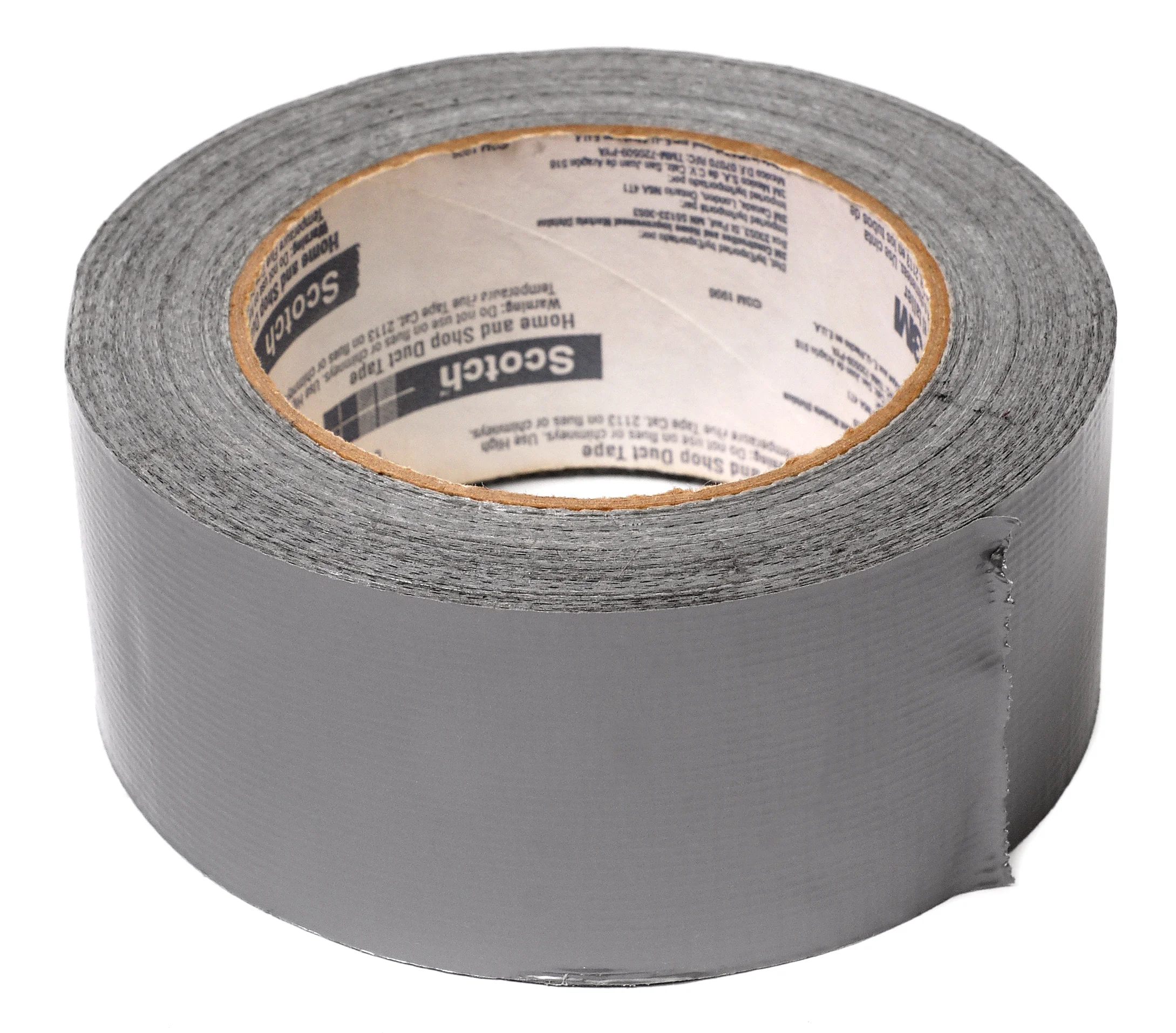
There is a lot of discussion these days regarding how information can help in disasters. But is hard to pinpoint exactly how it can help. This is a lot like duct tape.
You carry duct tape around, maybe in your car or in your basement. It is there because one day you might need it. It is such a versatile product that you must have it available just in case something happens.
Information is similar in that ...
You may be wondering what these two things have in common. Believe it or not, they have a lot more in common than you think.
There is a lot of discussion these days regarding how information can help in disasters. But is hard to pinpoint exactly why or how it can help. This is a lot like duct tape.
You carry duct tape around, maybe in your car or in your basement. It is there because one day you might need it. It is such a versatile product that you must have it available just in case something happens.
Information is similar in that you want to keep as much of it as around just in case you need it. You may not know why or how you will use it, but you know you will one day. You want to be prepared when that day comes.
But what if you could have a little better idea of why or how that information (or duct tape) is needed? This would help so much with optimizing what you collect in the first place so you are not spinning your wheels collecting and managing useless information. You could also have more relevant information available to you when the time comes rather having to dig through a digital information haystack to find a needle.
To draw an analogy, what if you knew that one of the reasons you would need duct tape is to cover electrical cord for an impromptu emergency operations center? Could a light duty grey duct tape do the job? Sure, but having a heavy duty duct tape that is red or yellow would be more helpful and practical. The added color and reliability of heavy duty tape helps improve your safety precautions. Now you know you should have at least a few roles of heavy duty colored tape.
What is the lesson here? Try to figure out in as much detail the most useful information you might need for a disaster and focus on developing processes and systems that help collect, manage, and share this particular information. Start small and grow from there. Don't try to capture every possible piece of information, it is a daunting and unrealistic task. It is better to have 20% of the right information than 100% of the wrong information.

Data.gov Launches Disaster-Specific Open Data Portal
On Monday, Data.gov launched a disaster-specific open data portal. This was an initiative first announced in at the White House Innovation for Disaster Response and Recovery Demo Day this past July. Many other innovative apps, tools and initiatives were also demoed that day.
The portal features a number apps, tools, and data relevant to disaster and is conceptually similar to what NYC did a couple years ago with its public safety data. In total, 114 Federal data sets are already indexed in the portal
On Monday, Data.gov launched a disaster-specific open data portal. This was an initiative first announced in at the White House Innovation for Disaster Response and Recovery Demo Day this past July. Many other innovative apps, tools and initiatives were also demoed that day.
The portal features a number apps, tools, and data relevant to disaster and is conceptually similar to what NYC did a couple years ago with its public safety data. In total, 114 Federal data sets are already indexed in the portal and I am hoping many more are on their way. A portion of the data seems quite useful to integrate with your own data. Another portion of the data seems to be relevant for only a select subset of people.

The reason this open data portal is such an achievement, though, is because the future of innovation for disaster is in how we collect, organize and share data and information. Technological innovation will continue to plateau if we can not figure out better ways to access our most valuable commodities, data and information.
As it stands now, the 114 data sets is an extremely small portion of data. Much more data and information is needed by many different organizations and communities to effectively mitigate, prepare for, respond to, and recovery from disasters.
In addition, not all data that is needed is disaster-specific. For example, you may want to know population estimates for the jurisdiction you are supporting. This is relevant and useful data for disasters, but is certainly not disaster-specific.
Regardless, this is a huge step toward more open data for disaster. There is still a long road ahead and I hope this movement toward more open and accessible data keeps pushing forward.
3 Reasons Why Disaster Information is SO Important
For all the talk about about how we need better information delivered in better ways, I am struck by how easily people lose sight of why it is needed in the first place. After all, information that you don't need is really not helpful and can cause big problems. You can experience information overload, be distracted from your goals or tasks, or be unduly influenced by extraneous information.
Whether you are looking for information before, during or after disasters, there are three reasons why good information is important:
1) Situation Awareness - Information helps responders understand the situation
Information helps us identify operational gaps and enables us to effectively coordinate resources. Knowing the gaps along with what is going on and who is doing what is the heart of situational awareness. Without good awareness, though, it can feel like you are making a decision in a vacuum or hedging your bets on risky decisions more than you would like.
For all the talk about about how we need better information delivered in better ways, I am struck by how easily people lose sight of why it is needed in the first place. After all, information that you don't need is really not helpful and can cause big problems. You can experience information overload, be distracted from your goals or tasks, or be unduly influenced by extraneous information.
Whether you are looking for information before, during or after disasters, there are three reasons why good information is important:
1) Situation Awareness - Information helps responders understand the situation
Information helps us identify operational gaps and enables us to effectively coordinate resources. Knowing the gaps along with what is going on and who is doing what is the heart of situational awareness. Without good awareness, though, it can feel like you are making a decision in a vacuum or hedging your bets on risky decisions more than you would like. Generally speaking, the more situational awareness you have, the more you know that you are not duplicating effort and are prioritizing the right issues.
Good situational awareness strikes the right balance between information deficiency and information overload. It also incorporates three levels of information (Endsley, 1995):
- Perception - Knowing the elements of the situation and environment that are pertinent to your job. They can include things like situation monitoring and cue detection that helps inform your own picture of what is happening.
- Comprehension - Relating and synthesizing the information from Level 1 against the decisions you need to make and your overall objectives. At this state, you put your perception information into context with your response objective(s) and decision(s) to better understand the situation.
- Projection - Relating to what might happen and one's ability to see the possible trajectories of the events taking place or decisions you make. You need to have perception and comprehension of the current situation in order for future projections, anticipations and estimates to be effective.
2) Decision Support - Information helps responders make better decisions
For some decisions, a general knowledge of what is going on and who is doing what is not sufficient. General information about the situation won't suffice as you need more specific and focused information to make complex and important decisions. The goal is to make the best decisions given the information at your disposal that will result in the best outcomes. For example, choosing to initiate a community-wide evacuation is a big decision with many variables. A decision support tool that manages information effectively can help you project the impact of a storm (and impact of evacuation) and help you make the decision whether evacuation is the best course of action. Additionally, knowing the capabilities of and the potential for secondary impacts (i.e., residual flooding) to possible shelter locations will greatly inform your choice of shelter openings.
3) Outcome Metrics - Information helps us know if we are [being] successful
Information is the key commodity in the feedback loop that shows the failures/success of our decisions and interventions. Just because a decision is made doesn't automatically mean that the decision and approach is effective. Continuous feedback is important to take corrective action in a timely manner. But information doesn't just show success OR failure. The information that is most useful is usually in between the two in some fuzzy area that requires contextualization and understanding of the dynamics of the situation. Outcome metrics in disaster management is very difficult and incorporating them take time and experience.
For example, what if you begin to experience an unanticipated surge of people on the road at 5pm that are clogging your 2 major arteries? Is evacuation a complete failure? No. But does this perhaps require a different approach? Perhaps you might add additional law enforcement and tow trucks to help keep traffic moving or develop an on-the-spot traffic management plan for a 3rd artery. But your pre-established metrics indicate that you can still safely evacuate everyone in time because 10,000 people have already left and there is only 3,000 more to go. As a result, your decision to re-appropriate resources might change. (NOTE: This is merely an example. I am not advocating for letting people "sit" in their cars on the highway if that can be avoided. This also does not fully address the breadth of "outcome metrics" and how they can be used most effectively)
4) BONUS - Information as aid
Collecting information for your own situational awareness and decision making is a rather selfish way of thinking about information. Information is really a form of aid to the public as well as your response partners. Information is vital to their success as well. In addition, disseminating good information in the right formats (i.e., machine readable, real-time access, social media, etc.) for your audience(s) helps improve the community's outcomes as well. They need information just as much as you do to accomplish their priorities and objectives. The more they are self-sufficient and armed with the right information, the less burden you carry to take care of others.
Does this jive? Why else is information important to you?

Why is Disaster Information Management So Hard?
Information is one of the most important commodities in disaster management, including for operations and public awareness. In recent years as the size, scale and complexity of disasters have increased dramatically, the need for information systems that help us effectively manage information is more important than ever. As such, we need to consider the relative strengths and weakness of humans and computers and understand the totality of information issues that we encounter as an industry.
But we are only beginning to scratch the surface on how to get the right information to the right people at the right time in the right way. Theoretically this should be an easy task.
Information is one of the most important commodities in disaster management, including for operations and public awareness. In recent years as the size, scale and complexity of disasters have increased dramatically, the need for information systems that help us effectively manage information is more important than ever. As such, we need to consider the relative strengths and weakness of humans and computers and understand the totality of information issues that we encounter as an industry.
Carver, L., & Turoff, M. (2007). Human-computer interaction: the human and computer as a team in emergency management information systems. Communications of the ACM, 50(3), 33–38.
But we are only beginning to scratch the surface on how to get the right information to the right people at the right time in the right way. Theoretically this should be an easy task. But the reality is that we operate in complex and dynamic environments that make effective information management difficult. We rely heavily on our experience and expertise to get us through disasters; and our existing technical systems (in design and practice) tend to reflect organizational priorities rather than the full-scope of inter-organizational and community-wide objectives.
There is so much more possible if we can think more strategically about how we manage and share information during a response. What if information could play a larger and more central role in our decision making? What if we had all the information at our fingertips to make the best decision? What if there was one dashboard we could see everything that our jurisdiction neighbors are doing, what resources are deployed or waiting for assignment, and what missions are awaiting resource assignment? And what if we could then take action and have the system automatically update for everyone?
First, though, we need to understand some of our existing information sharing problems. Then we can begin to look at other issues in systematic ways and develop truly meaningful information management solutions. Looking at the different parts of information management individually is simply inadequate for our complex and dynamic information needs. There are many reasons for this and I highlight a couple of the challenges below.
Bharosa and Janssen (2010) provide a great overview of information sharing issues based on different levels of the problem. At the community level, they show that organizational silos are present and there is a lack of incentive for inter-organizational information sharing. At the agency or organization level, there is a reliance on protocols and information sharing up and down the operational hierarchy. At the individual level, there are problems with information overload, not knowing what to share, ability to process information and overall information quality.
Bharosa, N., Lee, J., & Janssen, M. (2010). Challenges and obstacles in sharing and coordinating information during multi-agency disaster response: Propositions from field exercises. Information Systems Frontiers, 12(1), 49–65. doi:10.1007/s10796-009-9174-z
Contrastingly, Day, Junglas and Silva (2009) identify more mechanistic problems with information sharing and narrow down the issues to eight key impediments surrounding information collection, processing and sharing. Many people have experienced one or more of these impediments in their operations as they attempt to gain situation awareness and make good decisions. As you develop your information management strategy for your organization, consider how each of your systems hinders or improves these impediments.
Day, J. M., Junglas, I., & Silva, L. (2009). Information flow impediments in disaster relief supply chains. Journal of the Association for Information Systems, 10(8), 1.
There are also issues with knowing when information is needed and by whom. I also suspect there are many opinions and thoughts on this.
I would really like to hear from you about your challenges with information? What are they? What do you think the root cause is?
P.S. This is largely the subject of my research and I hope to contribute a lot more to this discussion in the next year. I always equate this issue to trying to peel back the layers of an onion; once you peel back one layer, you find there are many more layers to go!